SEARCH

Subscribe

RSS Feed

Sub by Email

Twitter Me

INTERVIEWS

Peter Higgins, author of Wolfhound Century

Myke Cole, author of Shadow Ops Series

John Brown John, translator of the Zamonia Novels

Jim C. Hines author of Libriomancer

Nick Harkaway author of Angelmaker (review here)

Martha Wells author of The Cloud Roads

David Tallerman author of Giant Thief

Mazarkis Williams author of The Emperor's Knife

Rob Ziegler author of Seed

Steven Gould author of 7th Sigma

Douglas Hulick author of Among Thieves (review here)

Mark Charan Newton author of Nights of Villjamur (review here)

Kameron Hurley author of God's War (review here)

Brent Weeks author of The Black Prism (review here)

Anthony Huso author of The Last Page (review here)

Brandon Sanderson author of The Way of Kings (review here)

Lou Anders Editor of Pyr Books

Ian Tregillis author of Bitter Seeds (review here)

Sam Sykes author of Tome of the Undergates (review here)

Benjamin Parzybok author of Couch (review here)

Kristine Kathryn Rusch author of Diving Into the Wreck (review here)

Ken Scholes author of Lamentation

Cherie Priest author of Boneshaker (review here)

Lev Grossman author of The Magicians (review here)

Character Interviews

Alexia and Lord Maccon from Gail Carriger's Soulless

Lord Akeldama from Gail Carriger's Soulless

Eva Forge from Tim Akers's The Horns of Ruin

Atticus from Kevin Hearne's Hounded

RECENT REVIEWS

The Daylight War by Peter V. Brett

A Memory of Light by Robert Jordan & Brandon Sanderson

Scoundrels by Timothy Zahn

Cold Days by Jim Butcher

Year Zero by Rob Reid

Alif: The Unseen by G. Willow Wilson

Scourge of the Betrayer by Jeff Salyards

Redshirts by John Scalzi

Control Point by Myke Cole

Angelmaker by Nick Harkaway
My BlogCatalog BlogRank Wikio - Top Blogs - Literature
Showing posts with label Fantasy. Show all posts

GUEST POST | Foes and Friends by Tom Doyle


Foes and Friends
by Tom Doyle
author of American Craftsmen

I owe my first novel to my childhood enemy.

I’ve always been fascinated by war. War stories may be exciting or appalling, but always interesting. It’s not surprising then that my debut novel from Tor, American Craftsmen, is a modern-day fantasy of military intrigue.

As a kid, from the time I was first selecting which books to read, I was devouring war histories. My mom indulged me with a membership in the Military Book Club. Like many, I was primarily obsessed with the Second World War, with its sweeping strategies and tactics and its grand-scale battles across the globe.

What I didn’t realize was that many of the truths of war were hidden in the armchair-general style of nonfiction that I was reading. Then, I read All Quiet on the Western Front, and my childhood enthusiasm for military history became more restrained and thoughtful. For the first time, I acquired an intellectual sense of the personal cost of war for both friend and foe.

As an adult, I read more of the oral history-based accounts of war that dealt with the experiences of individual soldiers. In lieu of abstract strategies and tactics, I also developed more of an interest in the equipment and organization that made a difference in combat, if only to improve my play at computer strategy games based on individual campaigns and battles. When I decided to write American Craftsmen, I read special ops and espionage histories and particularly noted the successes, failures, and limitations.

Still, all these educational experiences were at a considerable remove from the realities of special operations combat, even if I threw magic into the mix. For my novel, especially its opening, I knew I would need primary source material for its real-world military aspects. My main source for much of the immediate detail in American Craftsmen was my long-time friend Dave. Dave served during the First Gulf War and had the personal experiences that I needed to hear.

Oddly enough, during my grade school years Dave was my nightmare, an enemy on a scale I haven’t known since. But in high school, we became friends almost for perversity of it. We've maintained this unlikely friendship through his time in the U.S. Naval Academy and his service, and through his civilian life since. Though this wasn't my intention in writing it, people may see a distant echo of our story in the rivalry of two of the characters in my novel.

For writing a fantasy thriller, living in Washington DC has definite advantages. I’ve toured the Pentagon, and I’ve made some more friends who are ex-military or ex-intelligence. Also, many of the great Civil War battlefields are a just a short trip from the capital, and my tours of those provided descriptive detail for one section of my book. From living and working in DC, New York, and Tokyo, I’ve also been uncannily close at hand for some of the great terrorist incidents of the last generation.

A final war-related theme of American Craftsmen is its multigenerational military families. Again, this concept required some research and thought on my part; in my family, military service has been the exception rather than the rule. As the Scipios were to Roman history, multigenerational military families are a significant part of U.S. history, as one can see in the Lees of the Revolution and the Civil War, and in the stories and real life of Lucian Truscott IV. Elite military families also dovetailed nicely with my concept of secret magical family lineages in the U.S.

The experience of writing my novel, the first of a three-book series, has taught me how much I still would like to learn about military life and combat. I look forward to more research, reading, and touring, and to hearing more of the comments and stories of soldiers, intelligence officers, veterans, and one particular childhood enemy who’s now my friend. I hope you’ll feel free to contact me or connect with me on the social media platform of your choice.

###

Tom Doyle’s first novel in a three-book contemporary fantasy series from Tor, American Craftsmen, was published in May 2014. His short fiction collection from Paper Golem Press, The Wizard of Macatawa and Other Stories, includes winners of the Small Press Award and Writers of the Future AwardIf you’d like to read more about American Craftsmen or his other stories, please go to his website at www.tomdoylewriter.com.

You Might Also Like:
INTERVIEW | Myke Cole author of Fortress Frontier
REVIEW | Control Point by Myke Cole
REVIEW | The Heroes by Joe Abercrombie
REVIEW | Empire in Black and Gold by Adrian Tchaikovsky

GUEST POST | Industrialization in Epic Fantasy by Brian McClellan


The Industrial Revolution was a time of great change in our history. There were immense technological breakthroughs as well as wave after wave of political and social reform. The class system was breaking down and kings were being pulled from their thrones. Unprecedented economic growth swept across large parts of the world.

This most important of times in human history is often either maligned or ignored by epic fantasy.

The precedent for this seems to have been set by Tolkien. In his Lord of the Rings series, industrialization and technological advancement only seems to happen among the orcs. This is portrayed very well in the film where we can see great clouds of toxic pollution hanging over Mordor, and in Sarumon's lands he tears down the ancient forests to fuel and make room for belching factories to arm his Uruk-hai.

Tolkien focuses on the negative aspects of the industrialization, and why wouldn't he? During the Industrial Revolution people were crammed into dirty, overpopulated cities. Streets overflowed with trash and raw sewage. Rivers became toxic with the filthy runoff. Mining and logging on a large scale destroyed the countryside. All of this industrialization created a world in which it was possible to equip armies for world wars—a fact that Tolkien saw first hand.

There are plenty of others who focus on the disadvantages of technological progress in their epic fantasy. The starkest of these are post-apocalyptic epic fantasy; these are fantasy worlds that take place on a future Earth after nuclear war. Mark Lawrence's Broken Empire trilogy is one example, while Margaret Weiss and Tracy Hickman's Death Gate Cycle is another. In these worlds we see the ultimate endgame of industrialization—near annihilation.

In Promise of Blood, I wanted to treat the Industrial Revolution differently. Not as the means of evil, as Tolkien did, or advancement toward a nuclear holocaust, but as the simple wheels of progress. There is no inherent evil in industrialization—only what man decides to do with the results.

So I asked the question. "What place does magic have in an industrializing world?" The answer I found: a big one.

In my novels, the old school of magic—the Privileged with their elemental sorcery—are deeply entrenched in the nobility of the world. Along with the nobility they oppose this new rising middle class of capitalists and the factories and unions that come with them. At the same time they don't mind getting rich off the backs of the working man, or the canal being built over the mountains that will enable the import of more luxury goods.

The new powder mages, with their sorcery based on gunpowder, embrace industrialization. How better to produce more gunpowder and flintlocks? Factories help the Adran army become the best equipped among all the Nine Nations. The greater population density of the cities make it easier to find and recruit more powder mages.

Then there's the Knacked and their talents. The sorcery of the commoners is turned to whatever use they can find for it. Inspector Adamat uses his perfect memory to aid in his investigations. Olem becomes Field Marshal Tamas' bodyguard because he doesn't need sleep. The commoners adapt. They use their magic to better themselves in an increasingly complicated world.

There are some that might argue that industrialization takes the "epic" out of "epic fantasy." They might say that writing in this time period goes against the whole spirit of the genre. I don't agree. I think there are magic and heroes, good and evil, adventure and intrigue to be found in an industrial world and that the Industrial Revolution opens up a whole new set of possibilities for epic fantasy. Magic does not fade with technological advancement. It adapts along with the people that use it.

*****

Brian McClellan lives in Cleveland, Ohio with his wife, two dogs, a cat, and between 6,000 and 60,000 honey bees (depending on the time of year). He began writing on Wheel of Time role playing websites at fifteen. Encouraged toward writing by his parents, he started working on short stories and novellas in his late teens. He went on to major in English with an emphasis on creative writing at Brigham Young University. It was here he met Brandon Sanderson, who encouraged Brian’s feeble attempts at plotting and characters more than he should have. Brian continued to study writing not just as an art but as a business and was determined this would be his life-long career. He attended Orson Scott Card’s Literary Bootcamp in 2006. In 2008, he received honorable mention in the Writers of the Future Contest. In November 2011, PROMISE OF BLOOD and two sequels sold at auction to Orbit Books. It is due out in April of 2013. More info can be found on his website or on twitter.


You Might Also Like:
REVIEW | The Half-Made World by Felix Gilman
The Brandon Sanderson Interview
REVIEW | The Way of Kings by Brandon Sanderson
REVIEW | The Heroes by Joe Abercrombie
REVIEW | Prince of Thorns by Mark Lawrence

Cover Unveiled for The Crimson Campaign by Brian McClellan


One of the debuts I've most been looking forward to this year is Brian McClellan's Promise of Blood. It is a meaty looking Fantasy with a society that is working its way towards the mechanical age. You see guns are worked in, but there is still magic in the world. And Gods walk the Earth. This falls firmly in the up-and-coming sub-genre Flintlock Fantasy, which has been starting to come out in the fiction of Abercrombie, Weeks, and Chris Evans, but this appears to be the first to go for it full throttle.  Promise of Blood isn't even out until April, but we've already got a chance to see the cover for the sequel The Crimson Campaign, which won't be out until February next year.

Art by Michael Frost and Gene Mollica, Design by Lauren Panepinto
I'm not always into photo realistic images, but these covers more than work for me. They evoke a beautifully textured and detailed world that knows the dirty side to warfare.  Bravo to Orbit for the attention to detail. Here's the blurb for Promise of Blood since we don't want to ruin things for the sequel this early. Now do we? No, I thought not.
It's a bloody business overthrowing a king...
Field Marshal Tamas' coup against his king sent corrupt aristocrats to the guillotine and brought bread to the starving. But it also provoked war with the Nine Nations, internal attacks by royalist fanatics, and the greedy to scramble for money and power by Tamas's supposed allies: the Church, workers unions, and mercenary forces.

It's up to a few...
Stretched to his limit, Tamas is relying heavily on his few remaining powder mages, including the embittered Taniel, a brilliant marksman who also happens to be his estranged son, and Adamat, a retired police inspector whose loyalty is being tested by blackmail.

But when gods are involved...
Now, as attacks batter them from within and without, the credulous are whispering about omens of death and destruction. Just old peasant legends about the gods waking to walk the earth. No modern educated man believes that sort of thing. But they should...
You Might Also Like:
REVIEW | Farlander by Col Buchanan
REVIEW | The Black Prism by Brent Weeks
REVIEW | Nights of Villjamur by Mark Charan Newton

INTERVIEW | Myke Cole author of Fortress Frontier

Myke Cole is the author of the Military Fantasy series Shadow Ops, which started last year with Control Point followed by the just released Fortress Frontier. He’s done three tours in Iraq and was recalled to serve during the Deep­water Horizon oil spill. I finished Fortress Frontier right after this interview and found it to be an even better read the the first in the series. Each book has brought something new to the table while giving a good view of life in the military, granted military with magic, but that just amps it up even more.

MH: Shadow Ops: Control Point introduced us to a world where magic has come alive again and people with abilities are conscripted into the military. Control Point is through the eyes of military lifer Oscar Britton, but Fortress Frontier moves the POV to someone else. Why the change?

MYKE COLE:  All of my favorite fantasy writers, from Peter V. Brett to George R. R. Martin, deal with ensemble casts. I know plenty of writers have been incredibly successful following a single protagonist (Charlaine Harris, Jim Butcher, Devon Monk, etc . . .), but that has never been the story arc that appeals most to me. It's the interplay between characters that we know really well that draws me in. I love the sense of in-depth world building that we get when an author fully fleshes out even the most ancillary characters. The serving boy has a story, so does the guy who pumps your gas. Steve Martin does an amazing job of this in his novella, Shopgirl. Joe Abercrombie is another writer who does this really well. The three books following his outstanding First Law trilogy are all in-depth examinations of 2nd string characters from First Law.

I have worked really hard to give the reader a very different experience with each Shadow Ops book. I understand that this risks those fans who like to follow a single protagonist, but it's just not how I write. I'm proud of the fact that Fortress Frontier and Control Point do very different things. You'll be following an entirely different protagonist for Breach Zone as well.


MH: One of the biggest confrontations Oscar faces in Control Point is revealing his powers to his parents. But one of this things that keeps coming back to mind is Oscar's dad goes through a portal where everyone supposedly dies, but we learn that is not necessarily true. So is there a chance his dad is not dead?

COLE: I'm not going to give spoilers. I will only repeat what you saw in the text: A gate opened, Stanley Britton went through. When the gate closed, he was still alive. Schroedinger's Cat, brother.

MH: Holding out on me, I see. This brings up an old discussion. I understand why authors don't like to give spoilers of their stories, but as a reader do you think there are such a thing as spoilers? This is something I go back and forth on a lot personally, while when I write my reviews I try not to include big reveals, but rarely would learning something "ruin" the story for me.

MYKE COLE: I'm with you. Learning what's going to happen in a story seldom cheapens the experience for me. That said, I recognize that there are people for whom so called "spoilers" really do ruin the experience. I always keep that in mind when talking about stories. It's like a wedding that way: you think it's about you, but it isn't.

MH: Your military experiences permeates Control Point. Did you always plan to go into the service? And were any of the characters based off officers you worked with?

MYKE COLE: If you'd come to me in college and told me I'd be a mercenary and eventually a uniformed officer, I would have laughed until milk came out of my nose. I was raised as a scrawny, nerdy aesthete, and only developed physically because working out was less shameful than sitting alone in the cafeteria during lunch. 9/11 spurred a reinvention for many Americans, myself among them. It created a perfect storm of opportunity: A passionate desire to DO SOMETHING, coupled by a glut of opportunities to do them. As the smoke from those planes cleared, the public was suddenly willing to let contractors do a lot of things they would never permit if they weren't frightened half to death. Once I was working for a private company in a war zone, I felt like my service was cheapened because it ultimately served a for-profit entity. That planted the seed that grew into my deciding to join up.

MH: I had a friend join up as well. I think that's something that ran though a lot of people's minds during that time.

You've an acknowledged Dungeons and Dragons player and last year helped DM and organize the Author D & D event at ConFusion. After watching that I couldn't help but wonder if you ever had a game going during your tours of Iraq.

MYKE COLE: I worked 18 hour days, 7 days a week, so that was definitely not happening for me. However, when I was at the US embassy, I did note with pride that there was an advertisement for a Warhammer 40K game right along side the yoga class flyer on the community bulletin board. Space Marines in Baghdad. Real life is *way* stranger than fiction.


MH: Grueling hours, man. But I'm glad gaming is still out there. Back to Fortress Frontier. What are the biggest differences between Oscar Britton and Alan Bookbinder? Both are military men, but one from the grunt side and the other bureaucratic.

MYKE COLE: Oscar Britton is a *lot* more conflicted than Alan Bookbinder. This is because Oscar never had a sense of being moored somewhere. He didn't get along with his family, never established a lasting romantic relationship, and . . . well, he's a black guy in rural Vermont. He always had a sense of being out-of-place. The army filled that role for him, it became the home he never felt he had. So, when he's suddenly faced with the choice between the army and his own identity, he is really, really, REALLY torn over it.

Alan is the opposite. His life was smooth sailing from jump. Stable, supportive childhood, wife and kids, great career. He is as grounded as they come.

And then there's one more critical factor: Oscar Britton is a Probe. Alan Bookbinder self reports and is embraced by the system. Bookbinder faces some hard choices, but they're not morally conflicted choices. His path is clear. It's just a matter of finding the will to get it done.

MH: Fortress Frontier is the second volume of Shadow Ops with Breach Zone being the third. How will that differ from the first two? 

MYKE COLE: I'm very proud of having made each of the SHADOW OPS books very different from each other. Each book does something totally different (which also plays into my decision to vary protagonists for each book).

BREACH ZONE does two things that the first two books don't do. It is a tragic love story and an in-depth look at a single battle (a la Joe Abercrombie's THE HEROES). It also shifts focus to the political landscape in America following the upheaval resulting from . . . certain actions by the protagonists in books I and II. It has been the most difficult of the 3 books for me to write, and that's likely because it's the most ambitious. Here's hoping I pulled it off.

MH: You've also mentioned that you're writing a media tie-in novella. Is there anything you can say about that publicly?

MYKE COLE: Only that it won't be media tie-in. I have worked very hard with a few companies to find ideas that work with their franchises, but unfortunately, my writing just doesn't seem to be wired to fit those molds. In the one case where we were able to agree on an idea, the contract specifications were, frankly, unacceptable. I am certainly open to media tie-in work, but I'm not going to write something my heart isn't in just to make money.


MH: What is one your favorite D & D character names you've created?

MYKE COLE: When Pete (Peter V. Brett) and I played D&D in college, he got the Complete Book of Humanoids (2nd ed) and I rolled up a Wemic fighter. I a lot of . . . leonine stuff, I guess. Kicking down doors, killing people without talking to them and generally mucking up the campaign. Pete shook things up by killing me, then binding my soul into a statue. The resultant character had 18 in every stat, but was completely immune to all magic, including positive spells. Made for a fascinating game.

Oh, wait. You wanted to know his name. I don't remember.

MH: Do you have any celebration rituals when a new book is out?

MYKE COLE: I grab my agent and we hit every bookstore in the area, signing as many copies as we can find. I also try to chat up all the booksellers, even buying them a copy if they're willing to give it a read. A lot of the people working in bookstores are serious genre fans, and getting them interested in your work (or thinking you're a nice guy) is a great way to accelerate a launch. Sadly, this ritual takes less time every year, as more and more bookstores are closing.

MH: What is the greatest advice you've even been given as a writer?

MYKE COLE: It's the same advice I've been given as a military officer, government drone and human being: quit your bitching and get to work.

MH: Now on to the important issues. What is your favorite hat?

MYKE COLE: Of course it's my Mich 2002 combat helmet. Here's a shot of me posing with it during my 2nd tour.

MH: Awesome. What books are you reading at the moment?

MYKE COLE: Joe Abercrombie's Red Country and 2 other books for prospective blurbs. This is probably the most frustrating thing about being a pro writer. You barely have time to read as it is, and when you do, you can't simply get lost in a book and enjoy it. You're either deconstructing the reading experience as you try to improve your own craft, or you're reading a manuscript that your publisher sent you and feeling like a jerk because you're either too busy to finish it by the blurb deadline or don't like it enough to attach your name to it (I only blurb books I *really* love. So far, that's been just two: Daniel Polansky's Tomorrow, The Killing and Wes Chu's Lives of Tao). Going pro really does suck a lot of the joy out of leisure reading, which is ironic, because that's what made you want to go pro in the first place.

MH: Is there anything you'd like to say to close us out?

MYKE COLE: My blog, FB and Twitter are great places to see what I'm up to. I'd also like to call on your readers to consider a commitment in the military reserve. Seems like the nation has been going through some tough times lately, and nothing has done more for my mental health than feeling like I was able to ante up and HELP. I've deployed for the Deepwater Horizon oil spill, Hurricane Irene and now Hurricane Sandy, and I sleep so much better at night knowing that I pitched in and did something. If you can, I think you should. Stand with me.

You Might Also Like:
REVIEW | Control Point by Myke Cole
REVIEW | Low Town by Daniel Polansky
REVIEW | The Heroes by Joe Abercrombie
REVIEW | Empire in Black and Gold by Adrian Tchaikovsky
REVIEW | Dragonfly Falling & Blood of the Mantis by Adrian Tchaikovsky
REVIEW | Throne of the Crescent Moon by Saladin Ahmed

REVIEW | Scoundrels (Star Wars) by Timothy Zahn

What's this? Me read a Star Wars novel? Well stranger things have certainly happened. The last time I got into a SW story it was The Force Unleashed, which I liked well enough, but the video game was better. Scoundrels though is a decidedly different style though and is part of the movement to diversify the stories told in the SW universe.

Scoundrels is the caper we've all wanted from the SW universe and what should be the type of story that Disney attempts next rather than jumping into Episode 7. They need to do a side story or something only loosely attached to get their feet wet and what better than something that plays off the fun side of the SW Universe?

The story takes place not long after the events of Episode 4, so those memories are fresh for the characters, especially the destruction of Alderaan. Scoundrels is above all things a caper/heists, which is pulled off quite well as Han is put on the trail of over 100 million credits in the hands of the Black Sun, which is basically an intergalactic Mafia outfit used in many of the SW novels. Han, not one to be too greedy, brings in a crew to share the wealth and danger.

There are a few too many characters to keep track of on the team of 11 that Han has assembled, but Zahn has done an admirable job giving each their own distinctive voice and not throwing the balance too much in favor of any. The story is at its best when Lando and Han get into the thick of it. Han in particular spends too much time behind the scenes giving Lando a lot of time to grab attention, but isn't that what Lando is best at? Chewie even through all the warbling is still somehow an endearing character, but it was those I just met such as the ghost burglar, Bink, that I keep hoping would get more page time.

The villains though are much more of a standout than the traditional SW villains showcasing a keen intelligence and understanding of the implications at hand as they try to thwart all comers. With a caper it is all in the planning and finally improvisation to really sell it, which Scoundrels does well.

All in all this is a big step away from the traditional SW novels focused on action with plenty more tension and planning, but there are still plenty of things that go boom. And that ending was a nice twist I didn't see coming.

You Might Also Like:
REVIEW | Ready Player One by Ernest Cline
CLASSIC REVIEW | Homeland by R.A. Salvatore
REVIEW | Diving Into the Wreck by Kristine Kathryn Rusch
REVIEW | Redshirts by John Scalzi

MICRO REVIEW | Alif: The Unseen by G. Willow Wilson

Alif The Unseen is a story with a lot of depth. Many social issues are brought to the fore in an honest and believable ways. The characters while cold at first grow so much as things progress. You can feel them changing through the experiences they share. The setting is an Arab city where the divide between the classes is very apparent and is the closest I've glimpsed this society from the inside. Activism or hacktivism culture as it has become known as is at the center of things, but so is a magical world. Alif, the protagonist, learns that the two do not have to be mutually exclusive in his fight to stay alive.

Alif The Unseen is many things. A cyber thriller, a peek into the Arab way of life, and a journey through the mythology of the middle east. And it does each equally well in what ends up being one of the most memorable stories I've read this year. Superb in nearly every facet.  Simply, a brilliant cross of Hackers, Middle Eastern Society and Djinn. I can't wait to see what Wilson does next.

You Might Also Like:
Recommendations | Non-European Fantasy by Women
INTERVIEW | Mazarkis Williams author of The Emperor's Knife
REVIEW | The Winds of Khalakovo by Bradley P. Beaulieu
MINI REVIEW | Throne of the Crescent Moon by Saladin Ahmed


REVIEW | Control Point by Myke Cole

Military Fantasy has been a staple of genre for decades. The Black Company, Malazan, Tchaikovsky's Shadows of the Apt, and the Warhammer universe are some good examples, but none that I'm familiar with tackle the military in the present times. Contemporary Military Fantasy is something that we've clearly been lacking and Myke Cole's Control Point hopes to fill that void though it often has the feel of an Urban Fantasy even though much of the action takes place elsewhere. Given Cole's long military experience with 3 tours of Iraq he does have a unique experience to fuel the story.

Cole's series opener provides deep glimpses of some of the harsh realities and amazing highs capable in a military life even while mincing in some geek humor to take the edge off. Magic has seeped back into the normal world giving abilities to certain people. The world knows magic exists and all those capable of it in the United States are conscripted into the military except for a few people adept in the forbidden classes of magic. Those are silenced less they become the monsters humanity has always feared. The legal schools include the basic elements of those that can summon storms, move the earth, control fire, and command water at will. Illegal ones include those that can animate the dead and create portals to anywhere at will. This sets up a class system that is easy to hate and turns magic users into little more than drones. At least those that acquiesce to authority.

I ended up reading the first 2 chapters of Control Point 3 times before finally getting into the style as the first chapters can be difficult for those who abhor cold blooded killings of young people. That's exactly the choice that Oscar Britton faces in the opening pages. To do his job he must kill a teenager who has magic that she cannot be allowed to let loose. She's a Selfer who doesn't worry about the greater good. At least that is how the government characterizes Selfers.


After that mission Britton is faced with an even tougher choice. He manifests abilities in one of the prohibited schools of magic and things take a turn as he runs. The biggest weakness of the novel is Oscar. The world is very compelling, the politics, the magic, and the different views on the same issues (magic). But Oscar just goes too much back and forth over what he wants to do, what he feels his duty is, and what he believes in. He fights himself too much. He is a military man so why turn away from that when it is what he loves? At points he acts totally for himself and never really accepts that certain events were totally his fault. Granted he isn't put in a good place and left with many decisions so perhaps this fault is going too much into his head in the narrative. But when the chips are down Britton delivers.

Even with the weakness of Oscar I still ended up liking him. Control Point is at its best when the action happens, which is really quite often. Britton is flung from one life harrowing mission to another within pages. The magic is very impressive, especially when a skilled user is letting their full abilities loose. The sequencing of battles is particularly vivid. Picture those with the abilities from Avatar: The Last Airbender in modern combat situations from everything to a search a destroy mission in a sewer to an all-out battle on the field.

There are a lot of aspects I wish were explored more such as China being a country where magic users are free to live a semi normal life along with the magical plane that is only sparsely discussed. Also, I'd like to know a bit more about how the common people view those with latent abilities besides awe and fear.

Control Point is a solid, action packed debut with a few shaky parts that has a lot of appeal to it. By the end Cole more than found his footing and left me with high hopes for the continuation of the Shadow Ops series. I give Control Point 3.5 out of 5 Hats. The sequel Fortress Frontier should be out in February 2013, which I plan on checking out.

You Might Also Like:
REVIEW | The Heroes by Joe Abercrombie
REVIEW | Empire in Black and Gold by Adrian Tchaikovsky
REVIEW | Dragonfly Falling & Blood of the Mantis by Adrian Tchaikovsky
REVIEW | Throne of the Crescent Moon by Saladin Ahmed

Recommendations | Non-European Fantasy by Women


Fantasy by Women Who Broke Away from Europe
A List Complied by Martha Wells

This is a sampler list of fantasy novels and short story collections with non-European settings, or secondary fantasy worlds drawn from non-European influences, all by women writers.

Non-European fantasy can be hard to find, so this is meant to be a resource for readers and a way to focus on older or less well-known books by women writers. Hopefully at some point it can be expanded and annotated.

This list was compiled in a couple of days from my bookshelves and from recommendations, so I know there are many more authors and books that should be included. If you know of any fantasy novels that should be added, especially books published in languages other than English, please leave them in the comments. (Remember, the list is focusing on fantasy by women writers; there were some great books suggested but they were left off the list because they were categorized as science fiction.)

The main two things I was trying to avoid (at least for now) were 1) fantasies where European-type characters traveled to non-European settings (for example, Naomi Novik's Temeraire books) and 2) books primarily set in the US, even if they use a fantasy element from another source (like Tananarive Due's books). I did include a book by Judith Berman set in North America, but it has all Native American characters, is set before Europeans arrived, and a book by Sharon Shinn which is set mostly in an alt universe where China colonized North America.

Thanks to Kate Elliott, N.K. Jemisin, Kari Sperring, and Judith Tarr for suggestions and encouragement, and thanks to all the people who made suggestions on Twitter. Thanks to Marie Brennan for many additions from her similar list here. And thanks to the Mad Hatter Review.

At the moment, there are 96 97  100 102  106 writers on the list.

Lynn Abbey
Daughter of the Bright Moon

Alma Alexander
Secrets of Jin-Shei, Embers of Heaven

Elizabeth Bear
Range of Ghosts

Carol Berg
Transformation
Revelation
Restoration

Judith Berman
Bear Daughter

Beth Bernobich
Fox and Phoenix

Clare Bell
The Jaguar Princess

Hilari Bell
Farsala Trilogy

Aliette de Bodard
Servant of the Underworld, Harbinger of the Storm, Master of the House of Darts

Alice Borchardt
The Silver Wolf

Gillian Bradshaw
The Horses of Heaven

Marie Brennan
Warrior, Witch

Octavia Butler
Wild Seed

Lillian Stewart Carl
Wings of Power

Rae Carson
The Girl of Fire and Thorns

Kylie Chan
White Tiger, Red Phoenix, Blue Dragon

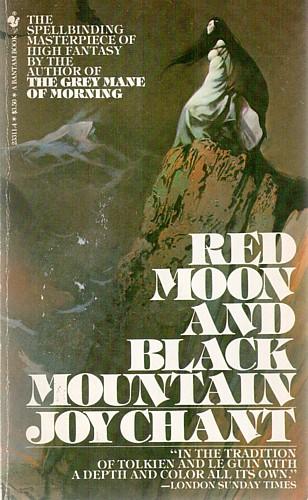
Joy Chant
Red Moon, Black Mountain
The Grey Mane of Morning

C.J. Cherryh
Rusalka, Chernevog, Yvgenie
The Paladin

M. Lucie Chin
The Fairy of Ku-She

Catherine Cooke
Winged Assassin Trilogy

Juanita Coulson
The Web of Wizardry, The Death God's Citadel

Leah Cutter
The Jaguar and the Wolf
Paper Mage
The Caves of Buda

Kara Dalkey
Goa, Biajipur, Bhagavati
Little Sister
The Heavenward Path
The Nightingale
Genpei
Euryale

Chitra Banerjee Divakaruni
The Brotherhood of the Conch series
The Palace of Illusions

Sara Douglass
Threshhold

Amanda Downum
The Drowning City, The Bone Palace

Doris Egan
Gate of Ivory

Kate Elliott
Crossroads Trilogy
Spiritwalker
Cold Fire

Jennifer Fallon
Lion of Senet, Eye of the Labyrinth, Lord of the Shadows

Nancy Farmer
The Ear, the Eye, and the Arm
The House of the Scorpion

Catherine Fisher
The Oracle Betrayed
The Sphere of Secrets
The Scarab

Susan Fletcher
Alphabet of Dreams

Eugie Foster
Returning My Sister's Face and Other Far Eastern Tales of Whimsy and Malice (short story collection)

Esther Friesner
Nobody's Princess, Nobody's Prize
Wishing Season
Sphinx's Princess, Sphinx's Queen
Child of the Eagle

Jane Gaskell
The Serpent, Atlan, The City, Some Summer Lands

Pauline Gedge
The Scroll of Saqqara

Heather Gladney
Teot's War
Bloodstorm

Lisa Goldstein
The Red Magician

Allison Goodman
Eon: Dragoneye Reborn

Angelica Gorodischer
Kalpa Imperial

Hiromi Goto
Half World

Jo Graham
Black Ships
The Hand of Isis

Kathryn Grant
The Phoenix Bells
The Black Pearl Road
The Willow Garden

Kerry Greenwood
Cassandra
Electra
Medea

Shannon Hale
Book of a Thousand Days

Barbara Hambly
Sisters of the Raven, Circle of the Moon

Anne Harris
Inventing Memory

Lian Hearn
Across the Nightingale Floor, Grass for His Pillow, Brilliance of the Moon, The Harsh Cry of the Heron, and Heaven's Net is Wide

P.C. Hodgell
Godstalk

Nalo Hopkinson
The Salt Roads
The New Moon's Arms
Skin Folk (short story collection)

N.K. Jemisin
The Hundred Thousand Kingdoms, The Broken Kingdoms, The Kingdom of the Gods
The Killing Moon, The Shadowed Sun

K. V. Johansen
Blackdog

Alaya Dawn Johnson
Racing the Dark, The Burning City

Kij Johnson
The Fox Woman, Fudoki

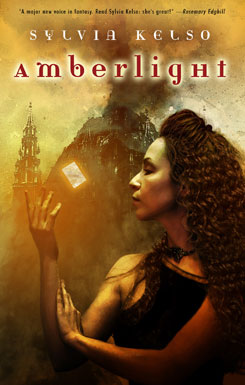
Sylvia Kelso
Amberlight

Lee Killough
The Leopard's Daughter

Patrice Kindl
Lost in the Labyrinth

Naomi Kritzer
Freedom's Gate, Freedom's Apprentice, Freedom's Sisters

Glenda Larke
Watergivers trilogy
The Mirage Makers trilogy
The Isles of Glory trilogy

Ursula LeGuin
Earthsea Books
Lavinia

Tanith Lee
Tamastara (short story collection)
Cyrion
Night's Master
Death's Master
Delirium's Mistress
Night's Sorceries
A Heroine of the World

Grace Lin
Where the Mountain Meets the Moon

Malinda Lo
Huntress

Karen Lord
Redemption in Indigo

Nathalie Mallet
The Princes of the Golden Cage, The King's Daughters

Zoe Marriott
Shadows on the Moon

Ardath Mayhar
The Seekers of Shar-Nuhn
How the Gods Wove in Kyrannon

Carole McDonnell
Wind Follower

Juliet E. McKenna
Aldebreshin Compass series

Antonia Michaelis
Tiger Moon

Karen Miller
Godspeaker Trilogy

Sasha Miller
Ladylord

Miyuki Miyabe
The Book of Heroes
Ico: Castle in the Sky
Donna Jo Napoli
Bound
Beast

Andre Norton
Wraiths of Time
Shadow Hawk
Dragon Magic
Empire of the Eagle (co-written with Susan Shwartz)
Imperial Lady: A Fantasy of Han China (co-written with Susan Shwartz)
Noriko Ogiwara
Dragon Sword and Wind Child

Nnedi Okorafor
Zahrah the Windseeker
Akata Witch
Who Fears Death

Fuyumi Ono
The Twelve Kingdoms

Holly Phillips
The Engine's Child

Cindy Pon
Silver Phoenix, Fury of the Phoenix

Jessica Amanda Salmonsen
Tomoe Gozen, Thousand Shrine Warrior, The Golden Naginata

Fay Sampson
Star Dancer

Marella Sands
Sky Knife
Serpent and Storm

Courtney Schafer
The Whitefire Crossing

Susan Shwartz
Heirs to Byzantium Trilogy
The Grail Of Hearts
Silk Roads and Shadows
Arabesques I and II, editor
Empire of the Eagle (co-written with Andre Norton)
Imperial Lady: A Fantasy of Han China (co-written with Andre Norton)

Carol Severance
Demon Drums, Storm Caller, Sorcerous Sea

Nisi Shawl
Filter House (story collection)

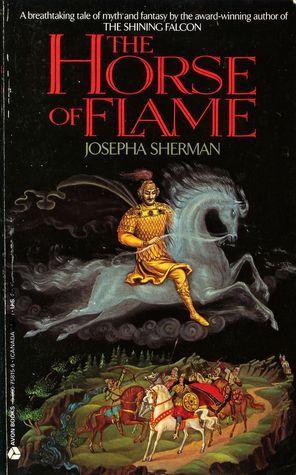
Josepha Sherman
The Horse of Flame
The Shining Falcon

Sharon Shinn
Gateway
General Winston's Daughter

Kari Sperring
The Grass King's Concubine

Nancy Springer
The White Hart, The Silver Sun, The Sable Moon

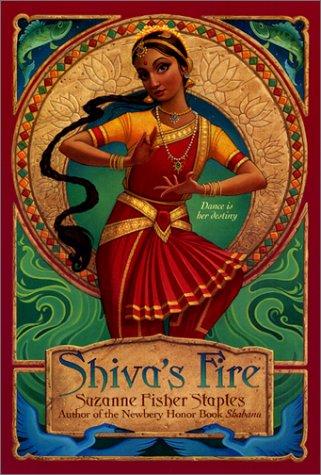
Suzanne Fisher Staples
Shiva's Fire

Judith Tarr
Alamut, The Dagger and the Cross
A Wind in Cairo
The Hall of the Mountain King, The Lady of Han-Gilen, A Fall of Princes
Arrows of the Sun, Spear of Heaven, Tides of Darkness
Lord of the Two Lands
Pillar of Fire
King and Goddess
Throne of Isis
The Shepherd Kings
White Mare's Daughter, Lady of Horses, Daughter of Lir
The Golden Horn

Sheree R. Thomas, editor
Dark Matter: Reading the Bones, Speculative Fiction from the African Diaspora

Heather Tomlinson
Toads & Diamonds

Nahoko Uehashi
Moribito: Guardian of the Spirit, Moribito II: Guardian of the Dark

Catherynne Valente
The Grass-Cutting Sword

Mary Victoria
Tymon's Flight

Martha Wells
City of Bones
Wheel of the Infinite
The Cloud Roads, The Serpent Sea

Elizabeth E. Wein
A Coalition of Lions
The Sunbird
The Lion Hunter
The Empty Kingdom

Michelle West
The Sun Sword series

Leona Wisoker
Secrets of the Sands

Carol Wilkinson
Dragon Keeper

Cherry Wilder
A Princess of Chameln, Yorath the Wolf, The Summer King

Liz Williams
Snake Agent, The Demon and the City, Precious Dragon, The Shadow Pavillion, The Iron Khan

Sarah Zettel
Sword of the Deceiver

***

Many thanks to Martha Wells for compiling this huge list. Again please chime in the comments with any other recommendations that fit with this list.

You Might Also Like:
Recommendations | So Much Steampunk, So Little Time
10 speculative fiction books I consider among the best ever
The 2010 Hattie Awards!!! Or the Best of 2010 (That I've Read)
The 2011 Hattie Awards!!! Or the Best of 2011 (That I've Read)
INTERVIEW | Karen Miller author of The Prodigal Mage
INTERVIEW | Martha Wells author of The Cloud Roads

US Cover Unveiled for Red Country by Joe Abercrombie

Photo by Gene Mollica, Michael Frost, and Lauren Panepinto
Orbit just premiered the US cover for Red Country, which follows the style of the latest trade paper editions by them seen below. It definitely seems that Orbit is dropping the A from the title so I'm curious if Gollancz will as well. My earlier post reveals a fairly big spoiler for this volume, which is further shown in the cover above for the eagle eyed. Now that I've seen this I'm eager to see what Gollancz has up its sleeve as I've always considered those the definitive editions coverwise.


Here again the the official blurb:
Shy South comes home to her farm to find a blackened shell, her brother and sister stolen, and knows she’ll have to go back to her bad old ways if she’s ever to see them again. She sets off in pursuit with only her cowardly old stepfather Lamb for company. But it turns out he’s hiding a bloody past of his own. None bloodier.

Their journey will take them across the lawless plains, to a frontier town gripped by gold fever, through feuds, duels, and massacres, high into unmapped mountains to a reckoning with ancient enemies, and force them into alliance with Nicomo Cosca, infamous soldier of fortune, a man no one should ever have to trust . . . .
Publication has been confirmed for November stateside and October in the UK. As much as I want to enjoy Spring and Summer, Fall can't get her quick enough.

You Might Also Like:
NEWS | More on Joe Abercrombie's A Red Country [UPDATED]
NEWS | Joe Abercrombie's Red Country
REVIEW | The Heroes by Joe Abercrombie
REVIEW | Best Served Cold by Joe Abercrombie
REVIEW | Among Thieves by Douglas Hulick
The Most Absurd Review of Joe Abercrombie's First Law
REVIEW | Wolfsangel by M.D. Lachlan

MINI REVIEW | Throne of the Crescent Moon by Saladin Ahmed

The Crescent Moon Kingdoms, land of djenn and ghuls, holy warriors and heretics, Khalifs and killers, is at the boiling point of a power struggle between the iron-fisted Khalif and the mysterious master thief known as the Falcon Prince. In the midst of this brewing rebellion a series of brutal supernatural murders strikes at the heart of the Kingdoms. It is up to a handful of heroes to learn the truth behind these killings.

Throne of the Crescent Moon is Nebula and Campbell nominee Saladin Ahmed's debut novel, which is placed in the world first created in his short story work. Sometimes a book comes along and you feel like it was written to hit all your own personal sweet spots. Throne of the Crescent Moon is one of those books for me.

Throne of the Crescent Moon evokes an old school Arabian setting with a touch of Egyptian while building a fresh world and history all its own filled with ghuls (zombies), lion shapeshifters, and a ghul hunter who has been there and done that so much I kept waiting for him to belt out the immortal Danny Glover line "I'm getting too old for this shit."

Doctor Adoulla has been battling ghuls for decades and we encounter him near the end of his tenure as the greatest ghul hunter in the Crescent Moon Kingdoms at a point where his role has been marginalized. He isn't sad about being forgotten--to a degree--in fact he would love to finally retire and pass on the mantle. Yet a threat has surfaced that tests his abilities and that of his young dervish protege. It is Adoulla's lifetime of experience that sets him apart from so many warriors in their prime and magicians seeking to make a name for themselves that seem to proliferate Fantasy. He's the uncle with all the best stories.

Striking the right balance with the pacing and fun action of a Sword & Sorcery story while still bringing in the coarse and realistic tone found in modern Fantasy, Throne of the Crescent Moon is superbly executed. Everything has consequence in the story. The Doctor and his cohorts don't just bounce up after a fight, but need to mend their many scars, both on the outside and inside.  Ahmed doesn't let any of his characters off easy giving each things to regret and deal with in a realistic manner even while battling crazy sand monsters.

One thing that seemed off was the very rushed and somewhat chaotic climax, which I had to re-read in order to fully grok. Also, the story does seem like a preamble to a much larger tale despite standing on its own well as things are just set in motion for something more epic. None of this dampened the experience much, if at all, as Ahmed is a writer just coming into his own. His prose and characterization are already there and if he gets over a few niggling issues like these he could become one of the most popular wordsmiths of his generation.

It is hard to discuss Throne without at least Jones' The Desert of Souls (review here) coming to mind. Though both share many commonalities Ahmed's work is of a much richer and higher octane variety than Jones more classic style. There is room for both on your shelves by my estimation.

I'm loving this new wave of Sword & Sorcery and Ahmed just firmly put himself as the leader of the pack. I give Throne of the Crescent Moon 4 out of 5 hats. This is a debut not to be missed if you enjoy action oriented stories and memorable characters. The Crescent Throne Kingdom series will be at least three books long with the next out sometime in 2013.

You Might Also Like:
REVIEW | The Desert of Souls by Howard Andrew Jones
REVIEW | The Sword-Edged Blonde by Alex Bledsoe
REVIEW | Warbreaker by Brandon Sanderson 
REVIEW | Swords & Dark Magic edited by Jonathan Strahan & Lou Anders

FREE FICTION | The Cloud Roads by Martha Wells


Currently The Cloud Roads by Martha Wells is available free from Amazon in Kindle format.  I only recently read The Cloud Roads, but it swept me away into a second world fantasy like no other. If you're looking for something new in Fantasy look no further. Here is the blurb:
Moon has spent his life hiding what he is - a shape-shifter able to transform himself into a winged creature of flight. An orphan with only vague memories of his own kind, Moon tries to fit in among the tribes of his river valley, with mixed success. Just as Moon is once again cast out by his adopted tribe, he discovers a shape-shifter like himself... someone who seems to know exactly what he is, who promises that Moon will be welcomed into his community. What this stranger doesn't tell Moon is that his presence will tip the balance of power... that his extraordinary lineage is crucial to the colony's survival... and that his people face extinction at the hands of the dreaded Fell! Now Moon must overcome a lifetime of conditioning in order to save himself... and his newfound kin.
The Cloud Roads is the first in the Books of the Raksura series with the second The Serpent Sea coming out in mid-January. While the first book stands well all on its own I can't wait to see what the future has in store for Moon. Beware reading the blurb for The Sea Serpent unless you want a spoiler. And Wells is already hard at work on the third volume.

You Might Also Like:
FREE FICTION | Jonathan Wood On the Beginnings of No Hero
FREE FICTION | A Ticket to Genevieve Valentine's Circus Tresaulti
FREE FICTION | Greg van Eekhout's In The Late December

REVIEW | Theft of Swords by Michael J. Sullivan

Royce Melborn, a skilled thief, and his mercenary partner, Hadrian Blackwater, make a profitable living carrying out dangerous assignments for conspiring nobles--until they are hired to pilfer a famed sword. What appears to be just a simple job finds them framed for the murder of the king and trapped in a conspiracy that uncovers a plot far greater than the mere overthrow of a tiny kingdom.

Can a self-serving thief and an idealistic swordsman survive long enough to unravel the first part of an ancient mystery that has toppled kings and destroyed empires in order to keep a secret too terrible for the world to know?


Michael J. Sullivan's The Riyria Revelations has quite a storied past. It all began with The Crown Conspiracy, which was published through a very small house and then books 2 through 5 were self published by the author and his wife after the original publisher had financial problems. The series quickly found an audience online and became kindle best-sellers, which lead the 6 book series to be sold to Orbit to be released as 3 omnibus editions.

I have been hearing about this series for about nearly two years and they garnered quite nice reviews from many of my blogger compatriots, but I still went into the first Orbit omnibus Theft of Swords a bit trepidatiously. But venture forth I did as I'm a sucker for omnibuses, after all. Filled with mystery, a possibly mad ancient wizard, and empires teetering on destruction Theft of Swords will captivate you with an effortless style.

Theft of Swords contains book 1 The Crown Conspiracy and book 2 Avempartha. I think it is the second title that at first threw me off when I heard about the series as I couldn't wrap my head around it, but have since learned that it refers to one of the places visited in the novel as is the case with another book in the series.

The Crown Conspiracy starts things on a strong note and is a classic example of Sword & Sorcery. The focus is clearly on the thieves as well as action and mystery instead of magic, but there is plenty more entered into the formula such as politics and the deep history of the land that is covered well enough to ground you in this world. Royce and Hadrian aren't two knuckle head sword jockeys though. They are an elite duo who try to use their brains before their brawn, but aren't always too particular who they kill as they are hired by both sides to pull thefts and assassinations or whatever job their employers are willing to shell the gold out for. The Crown Conspiracy's greatest attribute is that it doesn't take itself too seriously. The prose is so easy you'll forget you're reading for long periods and come away having felt you just watched an fun packed movie in your mind. What stays with you is the story, the characters, and the sense of having just made new friends.

The point of view switches at times from the thieves Royce and Hadrian to Arista, a princess of the main kingdom the story is set in. She provides a nice balance to the aloofness of Royce and Hadrian while contributing much to the conspiracy of the story. Royce and Hadrian are two of the most likeable characters going in Fantasy. Their subtle and not so subtle interactions work so well and let you in on all of their little jokes. The story moves across the kingdom after the pair is falsely accused of a high crime and escape only to land into even more trouble. Long lost secrets are uncovered and plots are averted only for greater danger to occur. All in all, The Crown Conspiracy is a very smooth ride and one that I'll think fondly of for quite some time.

Avempartha the second book on the other hand while still quite entertaining is a bit shakier especially in terms of pacing. As with the first book the perspectives includes Arista, but this time she is more of a passenger than protagonist and I found her sections just completely jarring and slow compared to the intrigue of Royce and Hadrian. Stakes are definitely getting great as larger powers are making moves in the land. At first the trope of finding a sword as with the first volume felt a bit done, but Sullivan miraculously makes this aspect all the more endearing the second go around. Royce in attempting to break into an ancient Elf stronghold, which brings a whole aspect little explored in TCC.. Avempartha is building to something much bigger as this series progresses. The briefly seen wizard from the TCC is a very beguiling character. In some small ways he reminded me of a more laid-back Bayaz. Is he the destroyer of kingdoms or the savior? That's still not clear, but Sullivan has left me enough crumbs from the loaf to want more.

Theft of Swords is definitely lighter fair. There isn't any sex to speak of and for a story with plenty of death it doesn't come off as overly bloody or graphic Sullivan sure knows how to spin a yarn that connects you to the characters even as he teases out . Theft of Swords is just good old fashion fun with endearing characters. Even when you can tell where the story is headed it is still just as fun finding out how they got there. I give Theft of Swords 8 out of 10 hats. Sullivan has made a Riyria fan out of me and I'll definitely be reading the next two omnibuses Rise of Empire(December release) and Heir of Novron(January release) that are coming out in quick succession. The books would certainly be appropriate for a YA crowd and serve as quite a good introduction to what good traditional Fantasy can be.

You Might Also Like:
GUEST POST | Michael J. Sullivan on Writing a Series of Intertwining Books Rather than Sequels
REVIEW | Among Thieves by Douglas Hulick
REVIEW | Shadow's Son by Jon Sprunk
REVIEW | Homeland by R.A. Salvatore
REVIEW | Swords & Dark Magic edited by Lou Anders and Jonathan Strahan