SEARCH

Subscribe

RSS Feed

Sub by Email

Twitter Me

INTERVIEWS

Peter Higgins, author of Wolfhound Century

Myke Cole, author of Shadow Ops Series

John Brown John, translator of the Zamonia Novels

Jim C. Hines author of Libriomancer

Nick Harkaway author of Angelmaker (review here)

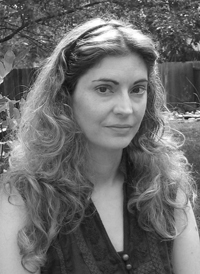
Martha Wells author of The Cloud Roads

David Tallerman author of Giant Thief

Mazarkis Williams author of The Emperor's Knife

Rob Ziegler author of Seed

Steven Gould author of 7th Sigma

Douglas Hulick author of Among Thieves (review here)

Mark Charan Newton author of Nights of Villjamur (review here)

Kameron Hurley author of God's War (review here)

Brent Weeks author of The Black Prism (review here)

Anthony Huso author of The Last Page (review here)

Brandon Sanderson author of The Way of Kings (review here)

Lou Anders Editor of Pyr Books

Ian Tregillis author of Bitter Seeds (review here)

Sam Sykes author of Tome of the Undergates (review here)

Benjamin Parzybok author of Couch (review here)

Kristine Kathryn Rusch author of Diving Into the Wreck (review here)

Ken Scholes author of Lamentation

Cherie Priest author of Boneshaker (review here)

Lev Grossman author of The Magicians (review here)

Character Interviews

Alexia and Lord Maccon from Gail Carriger's Soulless

Lord Akeldama from Gail Carriger's Soulless

Eva Forge from Tim Akers's The Horns of Ruin

Atticus from Kevin Hearne's Hounded

RECENT REVIEWS

The Daylight War by Peter V. Brett

A Memory of Light by Robert Jordan & Brandon Sanderson

Scoundrels by Timothy Zahn

Cold Days by Jim Butcher

Year Zero by Rob Reid

Alif: The Unseen by G. Willow Wilson

Scourge of the Betrayer by Jeff Salyards

Redshirts by John Scalzi

Control Point by Myke Cole

Angelmaker by Nick Harkaway
My BlogCatalog BlogRank Wikio - Top Blogs - Literature
Showing posts with label Night Shade. Show all posts

Cover Unveiled for The Flames of Shadam Khoreh by Bradley Beaulieu

Art by Aaron J. Riley.
Bradley Beaulieu's series The Lays of Anuskaya perfectly melds Fantasy with skyfaring Russian and Persian influenced cultures amidst a chain of islands. The art above is for the third and final volume in the series The Flames of Shadam Khoreh showing Nasim at age 18. Here's the blurb:
The Flames of Shadam Khoreh begins nearly two years after the events of The Straits of Galahesh. In it, Atiana and Nikandr continue their long search for Nasim, which has taken them to the desert wastes of the Gaji, where the fabled valley of Shadam Khoreh lies. But all is not well. War has moved from the islands to the mainland, and the Grand Duchy knows its time may be limited if Yrstanla rallies its forces. And the wasting disease and the rifts grow ever wider, threatening places that once thought themselves safe. The Dukes believe that their only hope may be to treat with the Haelish warriors to the west of Yrstanla, but Nikandr knows that the key is to find Nasim and a lost artifact known as the Atalayina.

Will Nikandr succeed and close the rifts once and for all? The answer lies deep within the Flames of Shadam Khoreh.
The Flames of Shadam Khoreh should be out sometime in 2013, but I can't find a firm listing as of yet. Beaulieu is also running a Kickstarter for his first short story collection, Lest Our Passage Be Forgotten & Other Stories, which will contain 2 original stories placed in this world. It ends in less than 2 days so get in it while you can.


You Might Also Like:
GUEST POST | Bradley P. Beaulieu on Growing Pains: Lessons in Writing the Sequel
REVIEW | The Winds of Khalakovo by Bradley P. Beaulieu
REVIEW | God's War by Kameron Hurley
REVIEW | Scourge of the Betrayer by Jeff Salyards

FREE FICTION | Kameron Hurley's God's War and Infidel


In celebration (and promotion of course) of the final novel in Kameron Hurley's genre bending and genre redefining Bel Dame Apocrypha trilogy, Rapture, Night Shade Books is giving away eBook versions of the first two novels God's War and Infidel. So now is your chance to get in with this multi-award nominated series. I thought quite highly of the first two books as well and just finished Rapture myself and it certainly closes things on a high bloody note.

Don't believe the hype? Find out FREE for yourself. Just send an email to Beldamegiveaway@nightshadebooks.com. Night Shade will return fire with an email giving you the info you need to download the files for God's War and Infidel. Both Epub and Mobi files are available.

You Might Also Like:
INTERVIEW | Kameron Hurley author of God's War
REVIEW | God's War by Kameron Hurley
REVIEW | The Windup Girl by Paolo Bacigalupi
REVIEW | How to Live Safely In a Science Fictional Universe by Charles Yu
The 2011 Hattie Awards!!! Or the Best of 2011 (That I've Read)

REVIEW | Scourge of the Betrayer by Jeff Salyards

Jeff Salyards is another new kid on the Fantasy block brought to us by Night Shade Books. His debut - also series starter - Scourge of the Betrayer isn't Epic Fantasy (at least not yet though it is building), but it is a very personal Fantasy with plenty of blood and realistic fights. The labels Low or Military Fantasy might apply. Either way it is one of the most grim and feral Fantasies I've read in some time. There is a stark honesty about battle, the consequences of it, and what killing someone means to those who do the deed.

The story probably won't sate those after Abercrombie yet a grim "falling around in the mud while trying to wildly stab someone in the back" story does unfold told through the eyes of a chronicler just trying not to die every two seconds. But when you sign up with the Syldoon Empire paying up your rent for the next month is probably not a very good investment. Arkamondos or Arki as he is affectionately called by the Syldoon's Captain Braylar Killcoin leads us through the world as the Syldoon work their clandestine missions. Many of the characters are cold and distant as befits their upbringing as warriors from an early age, but as they get to know Arki they become fully formed in their own fashion. This doesn't stop them from all being brutal monsters. Arki is of course thrown into the fish-out-of-water role that he plays quite well and works to keep you vested in his fate.

None of the characters get away unscathed and injuries aren't things that they just shrug off. They are slowed and need to recover, if they are lucky enough to survive. This is a medieval world with very scant magic. People aren't slinging spells at one another, but there are remnants of a bygone era that do still have mysterious power and a much alluded to group still yet to be seen that have a strong hold on people. Braylar's mysterious flail is quite a good play on the magical weapon ala Elric's Stormbringer. The action sequences are planned out very realistically, but it was the dialogues between Arki and Braylar and Ariki and the only female warrior Lloi that kept the black humor going.

An infuriating part of the structure is just when you think there will be a big reveal things pull back, which just makes you want it more. Scourge of the Betrayer is a book that doesn't give up its secrets easily. It makes you work for them. There are shades of much bigger machinations at work. Groups alluded to with very dark power and those bent on nothing more than causing chaos.

Scourge of the Betrayer isn't a book I can say I loved outright, but it does pull you along and leave you wanting more. I did grow a strong sense of comradeship with the crew by the end even with an ending that wasn't wholly satisfying as the final reveal isn't as big as I was expecting.  I give Scourge of the Betrayer 3 out 5 hats. Jeff Salyards and Arki are the closest thing to Glen Cook and Croaker that I've ever found. Bottom line is if you like the Black Company then the Bloodsounders Arc is a series that you should seek out and it is building to something. What that something is has yet to be firmly established, but judging by Scourge it will hopefully be just as morally grey and bloody.

You Might Also Like:
GUEST POST | Jeff Salyards on Why I Love Bloody Fantasy So Much
REVIEW | The Heroes by Joe Abercrombie
REVIEW | Best Served Cold by Joe Abercrombie
REVIEW | Throne of the Crescent Moon by Saladin Ahmed
REVIEW | The Winds of Khalakovo by Bradley P. Beaulieu
REVIEW | Control Point by Myke Cole

Cover Unveiled for Earth Thirst by Mark Teppo


Mark Teppo--long-time friend of the blog--should be familiar to readers as we've covered his first two novels Lightbreaker and Heartland, interviewed him, and he's even stopped by to share some knowledge. So I couldn't pass up the chance to showoff the awesome cover for his next novel Earth Thirst--his take on Post-Apocalyptic Vampires. The art is by Cody Tilson who did my favorite cover of 2011, Seed. Knowing Teppo's work as I do I'm expecting an original take and I had a chance to get the lowdown on the project and the cover from him directly:
I've had the idea for Earth Thirst rattling around my head for a year or so now, but my schedule really hasn't been open enough to write it. After World Fantasy Convention last year, I realized that I probably wouldn't have a clear opening for another year or two and the idea behind the book did have some timeliness. If I waited and then tried to sell it--and then waited another year before it came out--I might miss the best opportunity.

So I sent Jeremy Lassen the pitch and a couple of chapters, explaining that I wasn't sure when I would have time to write it, but that I was very excited about their new books and their marketing efforts. I thought that they would know how to sell Earth Thirst and would get it in front of the right readers.

Jeremy emailed me back later that afternoon and said, "Yes, please, and how soon can I have it?"

I said, "Well, like I said, I'm super busy and . . . "

He replied, "Bla bla bla, writer's excuses, whining, not really listening. How about you get it to me as soon as you can and we'll put it in the schedule?"

(This is somewhat paraphrased, of course, but he and I had recently come to an understanding that the best way to get something on my schedule was to cram it on there and make me figure out how to solve the resultant time management problem.)

I meekly agree. Oh, who am kidding? I was thrilled.

A couple months later, I get a call that they're very excited about the premise of the book, they have a plan for marketing (which is exactly the sort of three word pitch I had been hoping to hear), and they're going to get Cody Tilson to do the cover.

"The guy who did the cover for Seed?" I ask after doing a quick Google search. "The guy who just won a Spectrum Award for Art Direction?"

"That's the one. You good with that?"

"Yeah, yeah, that'll be fine." All calm on the outside, jumping up and down on the inside.

Last week, they send me the cover. I'm still jumping up and down. Now I'm thrilled people will get a hint of what I'm talking about when I say I'm writing an eco-thriller with vampires.
Earth Thirst will be out January 8th from Night Shade Books. Here's the official blurb:
The Earth is dying. Humanity--over-breeding, over-consuming—is destroying the very planet they call home. Multinational corporations despoil the environment, market genetically modified crops to control the food supply, and use their wealth and influence and private armies to crush anything, and anyone, that gets in the way of their profits. Nothing human can stop them.

Once they did not fear the sun. Once they could breathe the air and sleep where they chose. But now they can rest only within the uncontaminated soil of Mother Earth—and the time has come for them to fight back against the ruthless corporations that threaten their immortal existence.

They are the last guardians of paradise, more than human but less than angels. They call themselves the Arcadians.

We know them as vampires. . . .

A Vampire Eco-Thriller? Count me in!

>You Might Also Like:
REVIEW | Lightbreaker by Mark Teppo
REVIEW | Heartland by Mark Teppo
INTERVIEW | Mark Teppo author of Lightbreaker
What's the Weirdest Book You've Ever Read?
INTERVIEW | Rob Ziegler author of Seed

GUEST POST | Bradley P. Beaulieu on Growing Pains: Lessons in Writing the Sequel

Art by Todd Lockwood
Growing Pains: Lessons in Writing the Sequel
by Bradley P. Beaulieu 

Strangely enough, though I've written five books up to this point (along with a few abandoned novels), I hadn't written a sequel until I launched into The Straits of Galahesh. I'd certainly had ideas for sequels. As a Tolkien disciple, I think in trilogies, so I had always planned on writing more books after the ones I'd finished before The Winds of Khalakovo, but I also knew that my time would be better spent if I tackled new projects. Why? Because if I did write a Book 2, I couldn't sell it. I'd have to sell its prequel, Book 1, first. And that didn't really help when (at the time) I was trying to get my name out there, get that first big sale.

Having more poles in the water, in other words, was the wiser course of action.

So it wasn't until STRAITS that I'd really had the chance to work with pre-existing material and expand on it. In some ways, it was a really gratifying thing. I'd spent so long developing the world, the characters, the magic, the politics, and then writing the story, it was like coming home. Strangely enough, I didn't jump right from WINDS and into STRAITS. When I finished wrapping up WINDS, I started submitting it for publication. That is, it wasn't sold yet. And so, following my mantra of starting a new project, I began working on a science fantasy. I got about 1/3 of the way through the book when the offer for WINDS came through from Night Shade. I was sad to set this other project aside, but I had no time to waste. I was now under contract. So the project went into the drawer and I started where WINDS left off.

Like I said, it was a nice homecoming, but it certainly wasn't easy. No book is easy. You're constantly applying the lessons you've learned (and sometimes breaking them) or learning new ones in the process of writing of the next book. Also, so much has to change in the next book. The characters, the world, the situation (i.e. the plot) based on the conclusion of the last tale. So there are always a lot of new challenges, even in writing a direct sequel.

As a small aside, just to share one of the oddities of publishing, I was 80% into the first draft of STRAITS (and I certainly knew how the book was going to end) by the time WINDS finally hit the shelves. So while it may seem from the outside that the writer has time to take stock and make adjustments, we really don't. By the time enough reviews had come in to actually start forming a consensus, I was fully done with the first draft and well into the second. The wheels of publishing move slowly, my friends.

Still, even though I didn't have a lot of outside influence in the form of reviewers or readers to guide the writing of the second book, I certainly learned some things along the way. The first that comes to mind is just how hungry readers are for explanation. One of the biggest criticisms I had for WINDS was the fact that not much of the underlying magic is explained. I will readily admit that it's something that's haunted me ever since I got serious about writing. In the first complete novel I ever wrote, I went rather heavy on explanation. After reading some books on writing and getting real feedback from writers on the book, I realized how blatant I was being about backstory. Then the pendulum swung the other way; I pulled way back and often explained too little. I've adjusted since then, but I still err on the side of not over-explaining. Note that I say "over-explain" where most readers would simply say "explain." People want to know backstory. They want to know how the world works. They just don't want it front-loaded. They want to become interested in the world and the characters first.


This is a very delicate balance—teasing the reader with questions without giving them the answers—and when you do give the answers, you want to do it in such a way that more questions are raised. This is one of the basic keys to good writing, but also one of the trickiest to do well. You have to find the right balance. Complicating this is the fact that the "rules" are not always going to be the same for each story you write. Some stories will call for front-loaded exposition. Others won't. (Like those with a big reveal toward the end of the tale. The Sixth Sense, anyone?)

I'm so against simply "telling" readers that I resisted the suggestion to put in a summary of Book 1 at the beginning of STRAITS. It turned out to be a great idea that people have commented on liking, but at first it just felt, I don't know, info-dumpy. But of course the point of such a summary isn't to dump information, but to re-orient the readers of WINDS before they dive into STRAITS, and also to give brand new readers some sense of the story already told in the event that they come to STRAITS first.

While writing STRAITS I started to grow more aware of just how hard it is to write metaphysical stuff. (I don't know if this is a lesson, per se, or more of a lament.) In the books, I have one type of magic that's akin to telepathy. Certain women called Matri submerge themselves in drowning chambers—basins filled with ice-cold water—and project themselves astrally. This stuff is really hard to write in a compelling way. I'm glad that I did it; it's a unique form of magic, and I think it adds a lot of cool mystique to the story. But let me tell you, I'll be surprised if my next set of books have even a whiff of such stuff. It's not that I dislike it. It's that it's exhausting to write in a way that I feel will be engaging to readers.

The last thing I'll mention is actually not a lesson that changed my behavior, but reinforced it. Lessons don't have to be negative. They can be positive reinforcements of rules you haven't really grokked yet. Perhaps you'd been told about them but hadn't put them into practice, or perhaps they were lessons you stumbled across (things self-taught, in other words), but you'll find that some of your initial strengths get better over time as you see how well they're working.

One such positive lesson for me was that finding and occasionally returning to my "center" as a writer is a very useful tool. This is a difficult thing to explain because it encompasses things like confidence and instinct, but what I'm talking about here is to trust in that inner, writer's mind that sometimes knows better than your conscious, waking mind. There were plenty of times in Book 1 where I felt lost. Sometimes I just knew I wasn't prepared for the session, and other times I started to write but came across a major stumbling block. I would often step away from the computer when I came across these sorts of barriers, but I would feel pretty bad when I did so. I'd feel anxious and behind. I'd feel like a failure, even if it was only for a day until I picked up my virtual pen again.

But now, after seeing how wise those breaks were, I no longer worry about these little blips. I know that if I work at the problem, I'll eventually find a resolution, and it'll usually work out pretty well—if not in first draft then in the second or third. I did not, however, simply wait for the muse to return. I would use a set of writing techniques to help jumpstart my stalled progress.

The first technique was to backtrack. If I'm lost, it's often because I took a wrong path in the writing a page ago, or a chapter ago, maybe even hundreds of pages ago. In one book (this was a painful lesson to learn) I found I'd taken a wrong path very early on. I had to re-write a ton of that book, and it was something that plagued the pages until I eventually gave up on the novel. Now I'm pretty good at recognizing not only that I've taken a wrong path, but identifying the place where I have to start over. This is a really good skill for young writers to nurture, because losing your way is one of the most common problems writers face, even the experienced writer.


The second technique was to consider the continuum of the story—to look at what I had already, look at its trajectory, and compare it to the place I wanted to be by the end. Using this technique assumes, of course, that you have a decent idea of what the ending looks like. Not every writer does. I usually do, and this allows me to make informed decisions about the plot and the characters, not so that I can create a linear set of scenes toward some arbitrary endpoint, but so that I can craft character decisions and plot points that will create an interesting landscape over which the reader can travel. I don't always end up in the exact place I thought I would. In fact, I rarely do. But that ending I have in mind from the beginning of the story? It allows me to guide the plot in creative ways without letting things fall off the rails completely.

The last technique I used was to return to that place that got me excited to write about these characters in the first place. It might be some of the original glimpses I had when the story idea first came to me. It might be looking at period artwork that gave me some inspiration. It might be some passage that I'm particularly proud of. The point is to return to a place of pride, creativity, of drive. I find that if I can do that, it will often advise my choices, and often I'll take the proper one to move forward. Sometimes finding your way out of writer's block is merely about confidence in the story, and this usually allows me to remember just how cool the story is in my head. Then it's just a matter of getting it onto the page.

It was a long road to the completion of the second novel, and there were bumps and bruises along the way, but it was all well worth it. I'm very excited to finally share the second installment of The Lays of Anuskaya, and I sincerely hope you enjoy it.


Bradley P. Beaulieu is the author of The Winds of Khalakovo and The Straits of Galahesh, the first two books in The Lays of Anuskaya trilogy and co-author of the novella Strata. In addition to being an L. Ron Hubbard Writers of the Future Award winner, Brad's stories have appeared in various other publications, including Realms of Fantasy Magazine, Orson Scott Card's Intergalactic Medicine Show, Writers of the Future 20, and several anthologies from DAW Books. His story, "In the Eyes of the Empress's Cat," was voted a Notable Story of 2006 in the Million Writers Award. His website is www.quillings.com.

You Might Also Like:
REVIEW | The Winds of Khalakovo by Bradley P. Beaulieu
GUEST POST | Bradley Beaulieu on The Winds of Khalakovo and Cultural Influences
GUEST POST | Michael J. Sullivan on Writing a Series of Intertwining Books Rather than Sequels
AUTHOR INTERVIEW | Karen Miller author of The Prodigal Mage
GUEST POST | Will McIntosh on Comic Strips Made Me Write Hitchers

Covers Unveiled for Two New Superheros Novels

Superhero novels have always been something I look forward to when they aren't focused on traditional heroes from comics. A few of my favorites include Soon I Will Be Invincible by Austin Grossman showing the flip side of things centering on the Supervillian and Ex-Heroes by Peter Climes, which combines a zombie apocalypse and Superheroes. There is also Carrie Vaughn's After the Golden Age delving into what it is like to grow-up without powers among Superheros and Ian Tregillis's Bitter Seeds combining alt history, dark magic, and Nazi Supermen. This year there are a couple books that fit into this vein that have caught my eye.


First up is Paul Tobin's debut Prepare to Die!. Tobin has worked in the comics for the past few years most notably on Spiderman, but his first novel looks to take a darker and more introspective tone on the subject of  super ones. The cover definitely screams superpower. Here's the description of Prepare to Die!:
Nine years ago, Steve Clarke was just a teenage boy in love with the girl of his dreams. Then a freak chemical spill transformed him into Reaver, the man whose super-powerful fists can literally take a year off a bad guy’s life.

Days ago, he found himself at the mercy of his arch-nemesis Octagon and a whole crew of fiendish super-villains, who gave him two weeks to settle his affairs–and prepare to die.

Now, after years of extraordinary adventures and crushing tragedies, the world’s greatest hero is returning to where it all began in search of the boy he once was . . . and the girl he never forgot.

Exciting, scandalous, and ultimately moving, Prepare to Die! is a unique new look at the last days of a legend.
Prepare to Die! will be released in June from Night Shade Books.


Christopher L. Bennett is best known as the author of many Star Trek and and Marvel Superhero novels so it is no huge surprise that his first non-established property work melds Space and Superheroes with Only Superhuman. Given all the books on post-humans and genetic manipulation in the future I'm actually surprised this hasn't been done before. The slated perspective works really well and I like the art, but I'm not sure it gets across that the character is a superhero. I guess it is a case of spandex = superheroes. Here's the blurb:
In the future, genetically engineered superhumans, inspired by classic Earth comic book heroes, fight to keep the peace in the wild and wooly space habitats of the Asteroid Belt

2107 AD: A generation ago, Earth and the cislunar colonies banned genetic and cybernetic modifications. But out in the Asteroid Belt, anything goes. Dozens of flourishing space habitats are spawning exotic new societies and strange new varieties of humans. It’s a volatile situation that threatens the peace and stability of the entire solar system.

Emerald Blair is a Troubleshooter. Inspired by the classic superhero comics of the twentieth century, she’s joined with other mods to try to police the unruly Asteroid Belt. But her loyalties are tested when she finds herself torn between rival factions of superhumans with very different agendas. Emerald wants to put her special abilities to good use, but what do you do when you can’t tell the heroes from the villains?

Only Superhuman is a rollicking hard-sf adventure set in a complex and fascinating future.
I've always been a fan of the galactic series such as Green Lantern Corp, Guardians of the Galaxy, the Infinity Gauntlet, and especially anything Thanos related so I definitely want to see Bennett's take about Superheroes in space.   Only Superhuman will be out mid-October from Tor.

You Might Also Like:
REVIEW | Bitter Seeds by Ian Tregillis
New York Comic Con: A Photo Essay (w/ Harry Dresden, Space Marines, and Yes the Elusive Yeti!)
GUEST POST | Will McIntosh on Comic Strips Made Me Write Hitchers
NEWS | Chine Miéville Finally Coming to Comics
Steampunk Comics: A Reading List
GRAPHIC NOVEL REVIEW | The Mice Templar (Vol. 1) by Bryan Glass & Michael Avon Oeming
MINI-REVIEW | Was Superman a Spy by Brian Cronin

INTERVIEW | Martha Wells author of The Serpent Sea

Martha Wells is one of those "where have you been all my life writers" having only discovered her last year with The Cloud Roads. But the best thing about finding an already established author is they have plenty of older works to tide you over until the newest book is released. She is the author of twelve novels, including the Nebula-nominated The Death of the Necromancer, as well as a number of short stories and nonfiction articles. Her first novel, The Element of Fire, was published by Tor in hardcover in July 1993 and was a finalist for the 1993 Compton Crook/Stephen Tall Award and a runner-up for the 1994 Crawford Award. The French edition, Le feu primordial, was a 2003 Imaginales Award nominee. Her third novel The Death of the Necromancer (Avon Eos) was a 1998 Nebula Award Nominee and the French edition was a 2002 Imaginales Award nominee. Her most recent release is the Fantasy The Serpent Sea, sequel to The Cloud Roads, both from Night Shade books.

*****

MH: Thanks for joining us today, Martha. You've now published about a dozen novels and been nominated for numerous awards including the Nebula. Was there ever a moment when you felt like you made it as a writer?

WELLS: Not really. There are a lot of moments that stand out for me. Nothing beats finding out you've sold your first novel. Except possibly finding out I had sold The Cloud Roads and The Serpent Sea after a three year sales drought. Finding out I was nominated for the Nebula award for The Death of the Necromancer was wonderful, once I'd been persuaded to believe that it was actually happening. My mother had been diagnosed with Alzheimer's that year, so it was a very stressful time, and that was one of the few bright spots in the year.

Nowadays, unless you have a super-mega-hit bestseller, I don't think you ever make it as a writer permanently. I think you have to make it all over again, prove yourself all over again, with each book.


MH: The Cloud Roads portrays a world with a seemingly endless history of immense cultures and species that have risen and fallen. There are no humans per se in the world, but many that are humanoid. What made you want to develop this world in such a manner?

WELLS: I wanted to do something different. The last fantasy novels I'd written were the Ile-Rien trilogy, where I was working with two different worlds: Ile-Rien, which was heavily based on 1920s France and Europe in general, and already had a background of history that I'd established in The Element of Fire and The Death of the Necromancer, and the alternate world of Cineth, which had Greek and Roman influences and a more sword and sorcery feel. I did enjoy using historical settings as inspiration, but I felt like it was time to really push myself to do something beyond that.

I also wanted to get back to the SF/F novels I'd read when I was growing up, the ones I used to find in the library when I should have been staying in the children's fiction section. The ones with wild pulp covers and two moons and people riding animals with three eyes and horns and being green for no reason. I really enjoyed those books, and I wanted to recapture that sense of wonder, and that feeling of starting out somewhere strange and travelling somewhere even stranger. That's always been one of my favorite things about SF/F. I like to read about places where I have no idea what's going to be over the next hill or around the corner.

MH: Is it any different or harder to write so many non-human characters. Most Fantasy books have at least one focal human while the Raksura books don't feature any.

WELLS: I don't think it's different or harder. I do the characterization in basically the same way. I try to think about what this person's life would be like, what their likes, dislikes, loves, fears, and so on would be. All that is affected by physical appearance and abilities, the environment where the characters live. When the person you're characterizing isn't human, you just have to use more of your imagination.


MH: You just recently finished the first draft of the third Raksura book. Any details you can tell us? Title perhaps? The Serpent Sea sees Moon and company travel to another colony. Are things getting more Epic? Do we get to learn more mysteries of this world?

WELLS: I actually haven't decided on a title yet. With every book I've done, I either hit on the title effortlessly at some point while I'm writing it, or I finish the book without a title and agonize over trying to pick a good one. With this book I'm in the agonize stage now.

There is a lot more in it about Moon's past and what happened to the court he originally came from, and it brings the whole story full circle, I think. They encounter the Fell again, too.

MH: By the same note do you see yourself doing anything else placed on this world? It seems so rich that you might be able to even do something in the deep past of the world given how many cultures have risen and fallen over the eons.

WELLS: I think that's a definite possibility, and I know I'd like to do more books set there, either with the Raksura or with another set of characters. It's a fun world to explore.

I have written one short story set in the Three Worlds with different characters than the books. It's "The Almost-Last Voyage of the Windship Escarpment" and it's posted for free on my web site.

MH: You just announced you've got a contract for the third Raksura book so big congratulations are in order! Do you have any celebration rituals when you sell a new book?

WELLS: Thanks! I don't really have any one thing that I do, except collapse in relief. Usually I go out to dinner with my husband, but the day I got the email about the third book, I was about to leave to drive to ConDFW in Dallas. So it was a lot of fun getting to see some friends there and tell them in person. Going to a convention is a great way to celebrate!

MH: What is the greatest advice you've even been given as a writer?

WELLS: I've been given a lot of great advice over the years, but I think the best critique I've had was from Bruce Sterling at a Turkey City Writers Workshop in Austin, Texas. This was a few years before I sold my first book, and I'd been trying to write short stories. He was very good at breaking down the prose and telling you exactly why this one sentence worked and exactly why this one didn't. It was the most helpful workshop I ever went to.

MH: You've published a couple media tie-in novels in the Stargate universe. Is that something you'd consider again? Was it very different from writing your own original fiction?

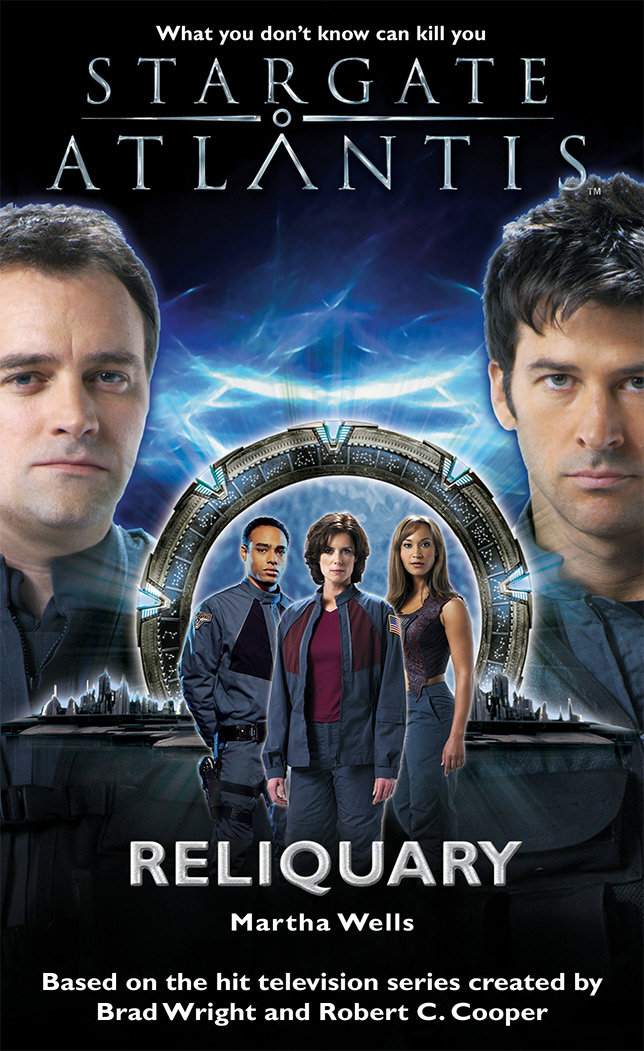
WELLS: I wouldn't do it again unless it was a show I loved as much as I did Stargate: Atlantis. I'd been watching SG1 since the first season, so I was already a big Stargate fan when SGA started airing, and the first season had me hooked. The only thing that was different from my original fiction was that I had to work hard to match the character's voices to the actors' performances, and to make sure I was getting the details of the technology right. I felt a big obligation to try to get everything right, and to come up with an adventure that would mesh with the kinds of things they do on the show. I really enjoyed writing those characters, so I had a lot of fun with those two books. It was very different from what I had been writing in my fantasy novels, and I think it was a creative break that I really needed.

MH: Many people discuss how e-books are the future and you've been re-releasing many of your older titles. What has your experience been like so far? Do you feel like they've helped your career and exposure in some way?

WELLS: It's been a pretty good experience. The one that was the most work was Wheel of the Infinite.  I didn't have a Word file of the final version of the book to use, so I had to cut apart a hardcover to scan it. That was a surprisingly unpleasant thing to have to do; destroying a book felt very, very wrong, even though I was doing it for a good reason.

I don't think having them available has helped my career or exposure any. I think they're mainly found/bought by people who are already searching for my name on Amazon or Barnes and Noble. It's mainly nice to have them still easily available to new readers who have read The Cloud Roads or The Serpent Sea and want to check out my older books.

MH: Now on to the important stuff. What is your favorite type of hat?

WELLS: I have a floppy canvas hat that I love, mainly because I can roll it up and cram it into a pocket without hurting it.

MH: What's the book you're most looking forward to this year?


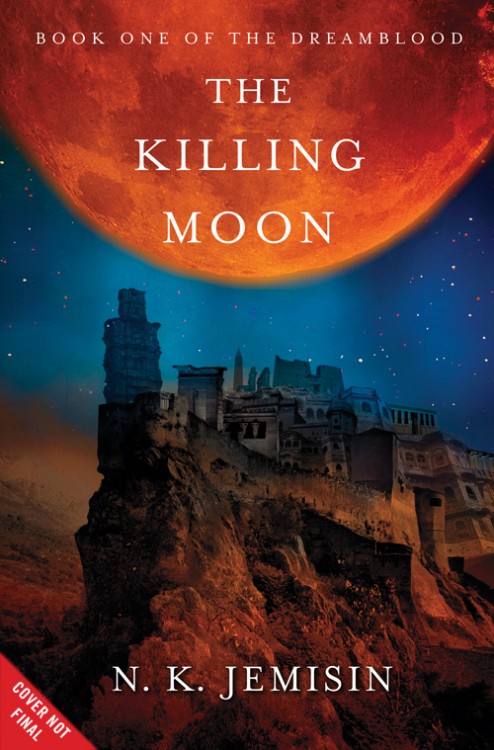
WELLS: There are a lot of books I'm looking forward to, but I think the one that's coming up the soonest is The Killing Moon by N.K. Jemisin.

MH: That's on my list as well. Is there anything you like to add to close us out?

WELLS: My web site is http://www.marthawells.com and has sample chapters of all my books, free short stories, and lots of other stuff. I also just put up an "extras" section for The Cloud Roads and The Serpent Sea, with the short stories, a missing scene from The Cloud Roads, some information on the world, etc. It's at http://www.raksura.com.

You Might Also Like:
INTERVIEW | Kameron Hurley author of God's War
INTERVIEW | Rob Ziegler author of Seed
REVIEW | Soft Apocalypse by Will McIntosh
REVIEW | The Winds of Khalakovo by Bradley P. Beaulieu

FREE READING | Phil & Kaja Foglio's Agatha H. and the Airship City


If you know Steampunk then the Foglios need no introduction for you. Phil and Kaja have created one of the seminal Steampunk comics (they prefer to call it Gaslamp Fantasy) with Girl Genius series starring the ever bubbly genius Agatha Heterodyne. Last year Night Shade and the Foglios started turning out prose versions of the story with Agatha H. and the Airship City, which is now being given away for free on Amazon as an eBook. No word on if other e-tailers will be giving it away at this price, but it may happen as Night Shade has done many similar promotions. Also, the 2nd prose book Agatha H. and the Clockwork Princess is coming out in hardcover in April.  The first edition of Airship City sold out quickly so if you're a collector get your order in sooner and if you've never tried Giril Genius this is certainly a good place to start if you're not into comics..

You Might Also Like:
Girl Genius novel is on the way from Phil & Kaja Foglio
Cover Unveiled for Agatha H. and the Airship City by Phil & Kaja Foglio
Steampunk Comics: A Reading List
FREE FICTION | Martha Wells Three Worlds Shorts
FREE FICTION | A Ticket to Genevieve Valentine's Circus Tresaulti

REVIEW | Faith by John Love

My last "what should I read next" poll had a clear winner with Throne of the Crescent Moon, which has already been receiving high marks (I liked it as well, but that comes later). Being a bit of a contrarian I wanted to also pay some service to the low-runner in the poll: Faith by John Love. Why was it the low-runner? I suspect it has to do with the book being Sci-Fi while most of the others were Fantasy of one stripe or another. Fantasy still trumps Sci-Fi in terms of fandom, in the US at least, but it really shouldn't especially with something as special and different as John Love's debut Faith.

Faith isn't about the Science, but there are some intriguing ideas here in that regard. It is a smart, thoughtful exploration of humanity and how far obsessions can take us. So the back story. A few centuries ago a mysterious ship nicknamed "Faith" attacked the space faring Sakhran Empire (vaguely lizard-like humanoids) causing their society to pull back technologically. No one knows what Faith is exactly. Is it even like a normal ship with a crew or some kind of space-born creature? That mystery alone pulled me in and gave off a very strong Star Trek vibe. Faith is what you might get if Joe Abercrombie turned his dark skills to Science Fiction after reading a few Robert J. Sawyer novels and seeing a few too many Q episodes of Star Trek. This isn't a hard Sci-Fi read by any stretch, but that should help pull in the more fringe readers who fear something too technical and just want a totally enthralling story.

Presently, humanity has expanded into space and created the Commonwealth along with a few other races including the Sakhrans. Faith has returned. She is hostile and no one knows how to defeat her, but there is a chance. A slim chance that the Commonwealth's latest Outsider class vessel captained by Aaron Foord. Outsider ships are crewed by brilliant yet deeply flawed people that hope to match and possibly defeat the almost mythological Faith. Each Outsider ship is christened with a name to remind those aboard of what they are. Charles Manson is the name of the vessel charged with stopping Faith at all costs. That name alone should give a good idea of who the people are that man the Manson. This isn't a crew of do-gooders, but they are damn good at what they do.

Faith is a challenging read that attacks preconceptions of what is right. Love also reminds us what a lonely and cramped place space can be especially given the submarine-like atmosphere of the Manson and the isolation that most of its crew crave. Faith herself becomes the most endearing character as I winced at each battle scar she earned.

Deeply introspective, Faith, keys into many elements of psychology with deep influences of Moby Dick. For pages at a time nothing seemingly happens except for character examining the implications of what is to come and just what got them in the situation they are in. This "nothing" is completely riveting as exploring these characters and their motivations are what propel the story. At first the story seems like one of redemption for the crew, but as things move along it is clear they aren't looking to be redeemed or even accepted. They just want to win. As their past is revealed many uncomfortable things that would typically turn me off to a character intrigued me more about how they went from such evil to the point of being the possible savior of an entire vast multi-planet society.

This is a story that can appear slow at first, however it is one of the most suspenseful novels I've read recently. This is a complete story from beginning to end, which is quite something given the micro and macro scales Love examines. Once the chess game is officially started between Faith and the Charles Manson you'll be hooked as their back and forth fights are taut scenes that please.

Faith my not be for everybody, especially those that generally turn away from the dark side of humanity, but it is a rewarding experience that leaves you with that sense of wonder about space, what it can hold, and our place in it. I give Faith 4 out of 5 hats. Whoever found John Love for Night Shade Books should get a bonus for finding the next great Science Fiction star. Love is going to eventually belong in the same breathe as some of our greatest Sci-Fi writers. If Faith had been published just a month earlier I have no doubts it would have made my best of Sci-Fi shortlist.

And remember a little Faith can kill you.

You Might Also Like:
REVIEW | The Quantum Thief by Hannu Rajaniemi
REVIEW | Galileo's Dream by Kim Stanley Robinson
REVIEW | Diving Into the Wreck by Kristine Kathryn Rusch
INTERVIEW | Paul McAuley author of The Quiet War

INTERVIEW | Mazarkis Williams author of The Emperor's Knife

Earlier this year I started hearing a few whispers about a new book called The Emperor's Knife. Quickly using my google-fu I hardly found any information on the author. Mazarkis Williams it seemed was a ghost. Some months later I found Mr. Williams on twitter and lucked into a review copy of The Emperor's Knife, which I've devoured. It is bloody good time and I recommend it to you all, especially if you're tired of Western set Fantasy. After reading it I couldn't pass up a chance to put Mazarkis to question.

***

MH: Thanks for taking the time out. To start things off can you tell me a bit about yourself? Info online is quite scant. So scant that I'm not entirely sure you're a real person. You are using an image of the invisible man as your twitter icon after all.


MAZARKIS: Yes. That avatar was created by someone at Jo Fletcher Books who never met me and didn't know anything about me, but needed a picture. Still, I am not completely invisible. As far as I know the information that is out there is accurate. And I can say a few more things about myself: I am a night owl. I read very fast but write very slow. I listen to Radiohead too much. I’m an old-fashioned table top/face-to-face gamer and I think I’m addicted to zero-calorie Vitamin Water.


MH: What's your barroom description of The Emperor's Knife to people just hearing about the book for the first time?

MAZARKIS: Barroom? I think I would babble (because, clearly, I would be drunk) about how there are these damaged people who have to pull it together and fight off this creepy menace, and how they find hope in the process, or redemption, depending on which character it is. Or if I started on that tack and their eyes began to wander, I’d say something about Arabian Nights and assassins and sorcerers, which is less accurate but sounds more exciting.

MH: The Emperor's Knife is part of Jo Fletcher's inaugural launch in the UK and part of Night Shade Books New Voices program. How has the attention been? How are you adapting to becoming an author?

MAZARKIS: Well I’ve been writing a long time, always struggling for every word, and that hasn’t changed. I hoped it might get easier, that being a published author would give me a confidence and a glibness I don’t really possess.

The attention to the book is just fine with me. I want to share the book with as many people as possible because I like the themes and the characters. I think they have something to offer and I hope readers agree.

As far as my personal space—there is this layer between me and my agent, and then my agent and the publishers, so I have a lot of privacy. Not that anybody would be knocking at my door trying to meet me.

MH: What came first in The Emperor's Knife? A character? Setting?

MAZARKIS: The character of Sarmin. I had just been reading about an Ottoman prince who’d been imprisoned in his room a long time, and it got me thinking about what it must be like to be stuck in this cushy place, counting out your days. Many people would perceive him to be very privileged, and he was by most measures, but it was a sad life, and it drove him crazy. So I was wondering what it was like to be that person.

That’s usually how it starts with me. The characters who interest me as a writer are the ones on the side lines. The people who delivered the orders instead of giving them, or the women who waited as opposed to the men who left. And for me the characters always come first. Who they are, what obstacles they face, what happens to change their situations. Without the characters, there is no story.

After the character of Sarmin came the setting. He’s pacing in a room, so the room has to be in a palace, and the palace has to be in an empire, so I went from there.

MH: Sarmin is quite a conflicted character. He's been trapped in a room for more than a decade with nothing to accompany him, but 5 books, which just begs the question what are your 5 books to be locked away with for 2 decades?

MAZARKIS: Anybody who knows me well is familiar with my inability to choose favorites. Also, I’m going to cheat and include two series in my list.

First, I am always a champion for The Great Gatsby—somehow I keep talking about that book, either online or with my family—so I will include it. I actually haven’t read it in a long time, but it had an impact on me in terms of structure and symbolism. Assuming I get to write in my locked-up room, then Gatsby would help me do that better.

I would have to take a history book with me, one that’s long and has a large scope so there’s always something new to read. Probably a big fat university textbook.

Then a poetry book, let’s say The Poems of Dylan Thomas.

Now I arrive at SF/F. Gene Wolfe’s Book of the New Sun (actually a quadrilogy) would keep me occupied for a long time. There’s so many layers and so much symbolism that I would be happy to read it many times.

Finally I would have to bring along my well-worn copies of Robin Hobb’s The Farseer Trilogy, since it contains some of my favorite characters in fiction. It would be like bringing some friends along with me.

Of course this is my list for today. I may change my mind tomorrow.

MH: How did your degree in History influence The Emperor's Knife? There are certainly Eastern and Middle Eastern elements throughout.

MAZARKIS: It seems you’ve just answered your own question, but I can elaborate a little bit.

I read as much European history as was required to get my degree, which was not much. That doesn’t mean I haven’t read about Europe on my own time; as a gaming geek, I’m almost required to do so. It was just never a focus of my studies.

This question is proving harder to answer than I expected.

I split my schooling years between England and Michigan, but mainly I was a victim and beneficiary of the Michigan public schools. One benefit is that Michigan had and continues to have a large Arab population, and that was reflected in our diverse student body. Also my history teacher was Egyptian, and that had a big influence on me.

I focused on Islamic history at university. I also tried to take Arabic, but ended up with a C and no memory of how to speak it. So to answer your question: when they say ‘write what you know,’ I chose the middle east. Though I don’t know it so well, I know it better than I know some other things.

But I want to emphasize that Cerana is not supposed to be any of the great Islamic empires. I took only elements, as you wrote, and then built something else around them. You can see similarities to the Ottomans, and also the Romans, but mostly you can tell it’s just made up. The most important difference is that the Cerani are polytheistic. You can’t take Islam out of the Ottoman empire, for example. It was central to their existence. It’s impossible to do, so I didn’t.

MH: Settu is a game mention in The Emperor's Knife, which reminded me of chess quite a bit. Is this a game you've actually developed?? Are you a gamer?

MAZARKIS: Yes, I'm a gamer, mostly face-to-face (F2F) tabletop roleplaying. (Shout-out to my gaming group, The Dysfunctional Party!)

However we do own all manner of games, including Settlers of Cataan, Pandemic, Talisman, and my favorite, Illuminati. We've had some historic games over the years and there are some long-standing rivalries.

Settu is something like a mix of chess and dominoes. I haven't really developed the game so that I can play it in real life, but I have a good idea how.

MH: I'm a big Pandemic fan as well. Now on to the important stuff. What is your favorite type of hat?

MAZARKIS: On a woman or on a man? I think my daughter looks cute in a cloche. On a man I like the look of a fedora. My step-father-in-law maintained the tradition of wearing a fedora whenever he went outside, and I thought he looked very classy. Also, trilbies are cool.

My son looks cute in an ordinary woolen hat.

What I'm not crazy about: baseball caps.

MH: What can we expect from the sequel Knife-Sworn? Are you still in the midst of writing it?

MAZARKIS: Yes, still writing it. Knife-Sworn deals with the fallout from The Emperor's Knife. While the main story line wrapped up, some threads were left open. I don't want to give too much away, but very little comes out of the blue in the second book.

What people can expect is more great characters and more strife. Also a little bit of romance, hopefully.

MH: Thanks for all your time. Is there anything you'd like to add to close us out?

MAZARKIS: Sure. I have a blog at Sarmin's Corner which I update when I can, but there is also a blog set up by Courtney Shafer (The Whitefire Crossing) and currently being transferred to Night Shade Books, called The Night Bazaar. It will feature posts from many of Night Shade's debut authors. There will be some interesting articles up there--actually there are interesting articles right now.

Jo Fletcher Books is currently doing a lot of great giveaways. You can follow them on twitter @jofletcherbooks or check out Jo's blog.

Night Shade Books is also having a big December. They are doing a holiday countdown that includes lots of free excerpts from their books. Check them out on twitter at @nightshadebooks.

Thanks for your time!

You Might Also Like:
REVIEW | The Black Prism by Brent Weeks
REVIEW | The Last Page by Anthony Huso
REVIEW | The Winds of Khalakovo by Bradley P. Beaulieu
INTERVIEW | Douglas Hulick author of Among Thieves
INTERVIEW | Kameron Hurley author of God's War

FREE FICTION | The Cloud Roads by Martha Wells


Currently The Cloud Roads by Martha Wells is available free from Amazon in Kindle format.  I only recently read The Cloud Roads, but it swept me away into a second world fantasy like no other. If you're looking for something new in Fantasy look no further. Here is the blurb:
Moon has spent his life hiding what he is - a shape-shifter able to transform himself into a winged creature of flight. An orphan with only vague memories of his own kind, Moon tries to fit in among the tribes of his river valley, with mixed success. Just as Moon is once again cast out by his adopted tribe, he discovers a shape-shifter like himself... someone who seems to know exactly what he is, who promises that Moon will be welcomed into his community. What this stranger doesn't tell Moon is that his presence will tip the balance of power... that his extraordinary lineage is crucial to the colony's survival... and that his people face extinction at the hands of the dreaded Fell! Now Moon must overcome a lifetime of conditioning in order to save himself... and his newfound kin.
The Cloud Roads is the first in the Books of the Raksura series with the second The Serpent Sea coming out in mid-January. While the first book stands well all on its own I can't wait to see what the future has in store for Moon. Beware reading the blurb for The Sea Serpent unless you want a spoiler. And Wells is already hard at work on the third volume.

You Might Also Like:
FREE FICTION | Jonathan Wood On the Beginnings of No Hero
FREE FICTION | A Ticket to Genevieve Valentine's Circus Tresaulti
FREE FICTION | Greg van Eekhout's In The Late December

FREE FICTION | Jonathan Wood On the Beginnings of NO HERO

December marks the start to Night Shade Books' Holiday Countdown, which will see a wide swathe of articles by Night Shade authors, giveaways, and excerpts around the interwebs. This is only Day 2 of the Night Shade Holiday Countdown. To follow along for the whole month visit http://twitter.com/nightshadebooks for regular updates. Day 2 treats us to 4 pieces of flash fiction from Jonathan Wood which were the genesis for what would become his Cthulhu / Kurt Russell / Urban debut Fantasy No Hero. Enjoy!


In the beginning...

There's a question that I think has been quietly beaten out of fandom - “where do you get your ideas from?” Authors tend to turn up their noses at it. This is partly, I think, because the answer is “everywhere,” and partly because another interpretation of “everywhere” is “I totally ripped off these people...” and we don't want to get caught.

Still, every idea has it's starting point, and I thought folk might find it interesting to see where No Hero started. A few years back I was a part of a (now sadly defunct) web site called Daily Cabal. A lot of cool authors contributing one piece of flash fiction every weekday. I had a piece up every 2 weeks, which meant coming up with a new idea every 2 weeks. And somewhere among stories of beak-faced girls, and postmodern princesses, Arthur Wallace emerged.

There were four Arthur Wallace stories written in all. A lot of the basics are there – Arthur, set upon by governmental bureaucracy, defending the realm from supernatural threats. My love for Lovecraft emerges in one of the stories. My love of pulp is there too. But there are differences here as well. Arthur has more of a noir tone here than I ended up using in No Hero. He is more of a man alone (it's hard to fit co-workers into 400-word stories). He still had a lot of growing up to do. Still, this is where I got the idea for No Hero, or, more specifically, the ideas. This is where I mixed and matched scraps until they fit. And, maybe more important, these stories still make me smile. I hope they make you smile too.


The Changing of the Times

It used to be all about magical swords. Blessed steel wreathed in flame, all that. Truth be told, I have, in the past, opined of the increasingly mundane nature of the magical armament. So there is at least a small part of me that stands up and cheers when the tattooed bastard reaches to his scabbard and pulls out a shimmering blue blade that crackles with fire.

On the other hand, the larger part of me is tied to a chair and couldn’t stand up to cheer even if it wanted to. Which it doesn’t.

I’d been tracking the trail of bodies for about two weeks. He’d been picking of virgins as he goes-which can’t have been as easy as it was when he first walked the earth. I followed him from London to Paris, across Alps, then into Germany, which is where I’m pretty sure he became aware of me because right now I’m in the back room of a strip club in Berlin, with my hands bound by stockings, which is not half as pleasant as several magazines have led me to believe.

However, despite appearances I do have a few things going in my favor. For starters, apparently stockings were not a prevalent item in twelfth century Egypt, so my tattooed friend, Mahut As-Ghul, is not entirely familiar with their unsuitability as bindings.

I kick back in the chair at about the same time the nylon rips. Mahut lunges. I tuck my body in and roll, but not in time to stop the blade passing through my ankle. The flesh doesn’t break but the pain is agonizing. Mahut’s blade glows brighter. Bastard just chopped off part of my soul.

Which brings me to my other and much more significant advantage. You see the operative word in my opening salvo here was that it used to be all about magical swords.

Ignoring my ankle, I draw my Glock and fire. Nothing unusual about the Glock. Standard issue for my department. But the bullets, ah yes, there’s the rub Mahut, old buddy.

A portal to several rather unpleasant dimensions is abruptly punched into Mahut’s skull. He starts to fold in on it, which really doesn’t look pleasant. Still, I can’t quite resist picking up the sword and finishing off the job the old fashioned way.


Fish Food

Quite frankly, I’m getting sick of this Lovecraft shit.

It started with these marine biologists and their new species of octopus. Two weeks later all the staff at London zoo look like over-sized scampi and are sacrificing the tourists to elder gods.

My government-sanctioned holy bullets do bugger all. Apparently shrimp-scientists are secular. So I leg it and take refuge in a cleaning closet near the chimp enclosure, which I admit isn’t very James Bond of me. Still, I come across an aerosol can in there, and two seconds later I’m out of there with my lighter flambé-ing a couple of the bastards. Zookeepers dissolve into masses of thrashing tentacles. Enough to put me off shrimp cocktails for the rest of my life.

Lighter in hand I manage to torch a path to the aquarium, but when I get a look at the bugger residing there, I don’t think Pledge and a Zippo are going to cut it. It’s about the size of a double decker, all jelly-like flesh and claws reaching for me. The glass of the aquarium shatters and I’m swept out with the water.

When I catch my breath it’s tottering massively towards me through the ruins of the building. Gas tanks blow. Everything in the aviary squawking at once.

I leg it again.

See the trouble with Lovecraft is he only really gives you running gibbering into the night as an option, and I’ve got plans this Friday…

I smack into the wall of the polar bear enclosure and that’s when, along with the concrete, the idea hits me. The thing behind me is getting close as I blow the lock of the enclosure. We’re talking meters. I’m through the door and then it’s smashing down the wall. I’m roll clear and come up staring into eight white faces. Not happy either. You wake up polar bears, you better do it nicely.

After that I let nature take its course. The elder god is a big bugger, but its still just an overgrown fish to these guys. Some mundanes can take care of themselves. Still sushi’s gonna be off the menu for a while now too.


The Old Switcheroo

According to the pulps, when you want to raid a wizard’s tower you just strap on a broadsword and a loincloth and go at it. Truth is you need a permit with fifteen signatures. Still the government spooks give me enough talismans I make Mr T look restrained. Hopefully they’ll get me further than the permit, which only buys me a stunned doorman and a ride in the penthouse elevator.

Now a tower wouldn’t be complete without a damsel in distress–April Wilcox, heiress of the Wilcox sock empire. Vesu Telquist made all six feet five of her disappear at his show tonight and has yet to make her reappear.

Mundane security’s at the door. So I drop them with rubber bullets. The permit might have worked but this feels more satisfying. There’s so many talisman’s round my neck I don’t which one defeats locks, so in the end I just kick in the door.

I clear the living room and the kitchen, then I open the bedroom door and almost gag–blood and shit spread over the room. The body’s in the bed. What’s left of it. Head’s gone. Belly’s open and the guts lie in circles on crimson sheets. Sick bastard.

I’m right on top of it when I realize it’s too short. April Wilcox is an Amazon with a brunette dye job. This is a shrimp with excessive leg hair.

She comes out of the wardrobe with a knife and goes for the talisman’s at my throat. Apparently her scrying let her know what was being sent to get her back. Vesu didn’t see it coming. Neither did I. We tustle and break. Just in case I’m still thinking of rescuing her, she opens her mouth a breathes fire at me. Some joke about a hot date occurs to me and I’m so ashamed I almost let her roast me. As it is my jacket’s on fire before I find the right talisman. We go at it then, she flinging elemental forces at me, me getting pummeled and my hands caught in ancient chains.

Eventually she and I both get sick of it. She tries fire again and I take the hit. That gives me time to line up the shot, and her blood mixes with Vesu’s. I have the talisman ready in my pocket from the first attack but most of my clothes are ash by the time I summon the water to douse me.

I leave the mess for the spooks to clean up and ride down the elevator pulling off the remains of my shirt. I look at what’s left in the mirrored walls. And on top of it all it turns out a loin cloth isn’t a good look for me anyway.


Flames Burn Red

“Red tape! Red goddamn tape!” And with that, ribbons of red silk burst from Gorman’s fingers and wrap me up tighter than a pair of earrings on Christmas Eve.

See, the thing about battling occult threats to Britain’s shores is that, despite the getting-to-fight-tentacle-monsters-with-a-flaming-sword bits, and the using-knuckle-dusters-that-punch-holes-into-alternate-dimensions bits, it’s still just a job. There are still timesheets, emails about missing staplers, annoying co-workers. Gorman was always an annoying co-worker. And there is the red goddamn tape.

Honestly, half the time something’s eaten most of Essex before I’m even able to get all the signatures I need to get my hands on the flaming sword in the first place.

Must have been worse for Gorman being in accounting. And apparently he really wanted to touch the flaming sword. Got himself fired over it. Submitted everything right but they rejected him anyway. Course they did. He was an accountant. Still, Gorman looked at the form with the big, “rejected” stamp and a gear slipped. Tried to grab the sword out of the safe. Didn’t get far. Course he didn’t. He was an accountant. And they fired him.

Apparently Gorman’s made use of the spare time. Who knows where he found the grimoire. The cape is a little more obviously Halloween gear, but it’s hard to poke fun when a chap breaks into the office and takes you out in under ten seconds.

The air fills with red ribbons. More people are bundled up. I lose sight of him in the blizzard of it. We lie there. I hear crackling in the distance, can smell something burning.

And then I see him. He’s holding the sword in both hands, hacking a path through the jungle of red tape he himself has created. Tape curls back as the flame licks through them. And he smiles like a kid with his hand in the cookie jar. The cape suddenly looks a little bit awesome.

Gorman gets to the door. Looks back at us, at the now limp strands of red tape, and the grin stretches wider. He buries the sword in the floor. And he walks away.

Eventually someone finds us, works us free. Someone, some civil servant, looks at me as I stand up and says, “Well, aren’t you going to go after him?” But, honestly, after that example, there’s no way I can be bothered to do the paperwork.

********

Jonathan Wood is an Englishman in New York. He is the author of the No Hero--a Lovecraftian urban fantasy that dares to ask, what would Kurt Russell do?. The sequel Yesterday's Hero should be out sometime in 2012. He also writes odd little things that show up in odd little places, such as The Best of Beneath Ceaseless Skies, Chizine, and Weird Tales. Most of his short fiction is available for free on-line. Links can be found on the bibliography page.


This guest post is part of Night Shade Books' Holiday Count Down. For other future posts check out their twitter feed twitter.com/nightshadebooks.

You Might Also Like:
GUEST POST | Jonathan Wood on Everything I Know I Learned From Kurt Russell
GUEST POST | Bradley Beaulieu on The Winds of Khalakovo and Cultural Influences
GUEST POST | Alex Bledsoe on Detective Influences
GUEST POST | Karen Miller on Ending a Series
GUEST POST | Mark Charan Newton on the Proliferation of Online Reviews (Help or Hinderence?)
INTERVIEW | Rob Ziegler author of Seed

Rob Ziegler is a name that you may not be familiar with as he only has a couple published credits to his name, but his debut Seed is poised to make a big impact in the Sci-Fi genre. Combining elements of near-future Sci-Fi, bioengineering, and post apocalyptic life-style Seed ventures into a world that is all too close to what our own could turn into.

MH: Thanks for joining us today Rob. To start us off can you tell us a little about yourself and your road to becoming an author?

ROB: I live with my wife in rural western Colorado, where I mostly grew up. My day job is property management, which is great because it allows me lots of time to write. And hike. My wife and I hike a lot in the mountains during the summer.

My road to becoming an author was fairly straightforward, if long. I knew as far back as high school that I wanted to write fiction, so I was able to focus on writing a lot in college. After college I let all kinds of career opportunities slide so that I could stay committed to writing. Mostly I wrote short stories. I only tried to sell a few, and almost all of them were rejected. It was like that for the better part of a decade: it just felt like practice.

I didn’t start trying to write novels until I was about thirty. I wrote two, and they were both horrible. There was so much I didn’t know...You can write a million short stories and it won’t teach you how to write a novel. I could tell they were bad books, but I knew so little I couldn’t even come up with a framework for how to do it better, so things could have gone on like that for a long time.

Fortunately, in 2008 I won a short story contest put on by the Rocky Mountain News. It was the first sci-fi story I’d written, and it got me connected with other sci-fi writers, namely Sarah Kelly. She invited me down to Flagstaff in 2009 for her Starry Heaven workshop, modeled after Charlie Finlay’s Blue Heaven workshops, basically a week of total immersion in the craft of novel building with a dozen sharp writers.

It was revelatory for me. I brought an early draft of Seed, and my Starry Heaven compadres took me straight to school. They gently let me know what I was doing wrong, and taught me some real fundamentals, stuff that’s obvious once you know, but that I probably never would’ve figured out on my own. I owe those folks a huge debt. Without their help I doubt I would’ve gotten Seed or anything else off the ground, probably ever.


MH: I've heard of Finlay's group, but didn't know it has inspired off shots. It seems like a lot of today's writers are coming from Clarion or groups like Blue Heaven. Now can you tell me a bit about Seed? Would Military Biopunk be an apt short descriptor?

ROB: Military Biopunk is a great phrase, I might steal it from you. It definitely describes certain aspects of the book. There are commandos, railguns, battles, so it’s definitely military. There’s a lot of bio stuff, an entire bioengineered city, actually, and parts of the story have a punk “fight the man” sensibility. Another big part of the story is about an orphan boy and his younger brother scraping by as scavengers and highwaymen in the lawless badlands of an American southwest that’s been ravaged by long drought, the result of climate change. All of that has a bit of a spaghetti western vibe. So maybe Military Spaghetti Bio Ecopunk. With heart.

MH: Very cool. I don't think I've seen any sort of Spaghetti Western themes used in Sci-Fi before. One term I've always like is Greenpunk, but it hasn't caught on just yet. What drew you to incorporating environmental concerns into your fiction?

ROB: I guess I don’t think of Seed as an environmental book, exactly. Incorporating environmental devastation was really just about the world building, looking at our a world today and wondering “where are we going?” And obviously there are some big problems on the table at the moment. Things like resource depletion vis -a -vis an exploding population; climate change, with all its nonlinear weirdness; the toxification of our food chain—things that will, it seems to me, end up defining our future if we don’t start making smarter, more sustainable choices. Seed takes place in that future where people have continually failed to make the smart choices, until there really are no choices left to make. It’s a scary, depleted place. But for me that’s also an aesthetic choice. I wanted that wild west feeling, a world where the characters all have to deal with scarcity and lawlessness, and where they get by on this odd mix of victimization and the humane helping hand—small moments of grace, to use the term of a friend of mine. So although the world is defined by environmental catastrophe, the story’s not really about that. Mostly, it’s this soldier trying to save her country, and in the process, her lover. And about this orphan boy trying to find a better life for his little brother.

MH: Now you've told us how you came to write and workshop Seed, but what is your publication story? Was Night Shade your first stop or was it shopped around? 

ROB: The selling of Seed was pretty standard, I think. My agent sent it to several houses simultaneously, Night Shade among them. I have a couple of friends who also have books with Night Shade, and I really like NS’s aesthetic, so I was quietly hoping it would be them who came through with the best offer. And they did!


MH: The cover to Seed is pretty incredible. What was your first thought when you saw the cover to Seed?  

ROB: My first thought when I saw the cover...I just laughed. I was so happy. Ross, my editor at NS, had told me Cody Tilson was the artist they were going with, so I’d scoped out Cody’s other cover art, and knew Seed was going to look good, because everything Cody does rocks. But I was still blown away. I couldn’t be happier with how it looks. I don’t actually know Cody, but I hope someday our paths cross. I owe that boy a beer.

 MH: What makes Seed's main character Sienna Doss special? 

ROB: I passed this question along to my wife and she says, “Because Doss is a kickass woman!” Which is true, Doss is tough, and kicks all kinds of ass. It made her scenes a lot of fun to write. But I’d go further, and say that what makes Doss special is her unwavering sense of duty. She’s utterly dedicated. To her country, to her lover, to her fellow soldiers. She puts herself on the line, again and again, without hesitation, even when the odds are hopeless. It takes a terrible emotional toll on her, but she finds a way to keep going. She’s heroic like that.

MH: Now that Seed is only months away from publication what else are you working on? Is Seed intended to be a standalone?

ROB: Seed is intended as a standalone. I have some ideas for a sequel, but right now I’m far more interested in other stuff. At the moment I’m working on a new sci-fi novel tentatively titled Angel City. It’s about a kid growing up in a weird future L.A. where all media is beamed straight into the frontal lobes. He’s determined to get rich by building the ultimate semi-sentient porn search bot—a bot whose personality, you’ll be happy to know, is based on Carroll’s White Rabbit.

MH: Now on to the important stuff. What is your favorite type of hat?

ROB: This type, definitely:
Image from DailyDawdle.com
MH: Nice. You might need something to brush the hair off with though. What are two things most people don't know about you? Do you keep a garden full of monkey statues? 

ROB: Two things most people don’t know...I hate snakes. I love dumb knock knock jokes.

MH: Thanks for sharing your thoughts. Is there anything you'd like to say to close us out?

ROB: My pleasure. Seed will be out November 1st. The first three chapters are available for free at my website: Zieglerstories.com. Thanks for having me.

You Might Also Like:
Cover Unveiled for Seed by Rob Ziegler
REVIEW | The Windup Girl by Paolo Bacigalupi
REVIEW | Soft Apocalypse by Will McIntosh
REVIEW | The Winds of Khalakovo by Bradley P. Beaulieu
REVIEW | God's War by Kameron Hurley