SEARCH

Subscribe

RSS Feed

Sub by Email

Twitter Me

INTERVIEWS

Peter Higgins, author of Wolfhound Century

Myke Cole, author of Shadow Ops Series

John Brown John, translator of the Zamonia Novels

Jim C. Hines author of Libriomancer

Nick Harkaway author of Angelmaker (review here)

Martha Wells author of The Cloud Roads

David Tallerman author of Giant Thief

Mazarkis Williams author of The Emperor's Knife

Rob Ziegler author of Seed

Steven Gould author of 7th Sigma

Douglas Hulick author of Among Thieves (review here)

Mark Charan Newton author of Nights of Villjamur (review here)

Kameron Hurley author of God's War (review here)

Brent Weeks author of The Black Prism (review here)

Anthony Huso author of The Last Page (review here)

Brandon Sanderson author of The Way of Kings (review here)

Lou Anders Editor of Pyr Books

Ian Tregillis author of Bitter Seeds (review here)

Sam Sykes author of Tome of the Undergates (review here)

Benjamin Parzybok author of Couch (review here)

Kristine Kathryn Rusch author of Diving Into the Wreck (review here)

Ken Scholes author of Lamentation

Cherie Priest author of Boneshaker (review here)

Lev Grossman author of The Magicians (review here)

Character Interviews

Alexia and Lord Maccon from Gail Carriger's Soulless

Lord Akeldama from Gail Carriger's Soulless

Eva Forge from Tim Akers's The Horns of Ruin

Atticus from Kevin Hearne's Hounded

RECENT REVIEWS

The Daylight War by Peter V. Brett

A Memory of Light by Robert Jordan & Brandon Sanderson

Scoundrels by Timothy Zahn

Cold Days by Jim Butcher

Year Zero by Rob Reid

Alif: The Unseen by G. Willow Wilson

Scourge of the Betrayer by Jeff Salyards

Redshirts by John Scalzi

Control Point by Myke Cole

Angelmaker by Nick Harkaway
My BlogCatalog BlogRank Wikio - Top Blogs - Literature
Showing posts with label guest post. Show all posts

GUEST POST | Foes and Friends by Tom Doyle


Foes and Friends
by Tom Doyle
author of American Craftsmen

I owe my first novel to my childhood enemy.

I’ve always been fascinated by war. War stories may be exciting or appalling, but always interesting. It’s not surprising then that my debut novel from Tor, American Craftsmen, is a modern-day fantasy of military intrigue.

As a kid, from the time I was first selecting which books to read, I was devouring war histories. My mom indulged me with a membership in the Military Book Club. Like many, I was primarily obsessed with the Second World War, with its sweeping strategies and tactics and its grand-scale battles across the globe.

What I didn’t realize was that many of the truths of war were hidden in the armchair-general style of nonfiction that I was reading. Then, I read All Quiet on the Western Front, and my childhood enthusiasm for military history became more restrained and thoughtful. For the first time, I acquired an intellectual sense of the personal cost of war for both friend and foe.

As an adult, I read more of the oral history-based accounts of war that dealt with the experiences of individual soldiers. In lieu of abstract strategies and tactics, I also developed more of an interest in the equipment and organization that made a difference in combat, if only to improve my play at computer strategy games based on individual campaigns and battles. When I decided to write American Craftsmen, I read special ops and espionage histories and particularly noted the successes, failures, and limitations.

Still, all these educational experiences were at a considerable remove from the realities of special operations combat, even if I threw magic into the mix. For my novel, especially its opening, I knew I would need primary source material for its real-world military aspects. My main source for much of the immediate detail in American Craftsmen was my long-time friend Dave. Dave served during the First Gulf War and had the personal experiences that I needed to hear.

Oddly enough, during my grade school years Dave was my nightmare, an enemy on a scale I haven’t known since. But in high school, we became friends almost for perversity of it. We've maintained this unlikely friendship through his time in the U.S. Naval Academy and his service, and through his civilian life since. Though this wasn't my intention in writing it, people may see a distant echo of our story in the rivalry of two of the characters in my novel.

For writing a fantasy thriller, living in Washington DC has definite advantages. I’ve toured the Pentagon, and I’ve made some more friends who are ex-military or ex-intelligence. Also, many of the great Civil War battlefields are a just a short trip from the capital, and my tours of those provided descriptive detail for one section of my book. From living and working in DC, New York, and Tokyo, I’ve also been uncannily close at hand for some of the great terrorist incidents of the last generation.

A final war-related theme of American Craftsmen is its multigenerational military families. Again, this concept required some research and thought on my part; in my family, military service has been the exception rather than the rule. As the Scipios were to Roman history, multigenerational military families are a significant part of U.S. history, as one can see in the Lees of the Revolution and the Civil War, and in the stories and real life of Lucian Truscott IV. Elite military families also dovetailed nicely with my concept of secret magical family lineages in the U.S.

The experience of writing my novel, the first of a three-book series, has taught me how much I still would like to learn about military life and combat. I look forward to more research, reading, and touring, and to hearing more of the comments and stories of soldiers, intelligence officers, veterans, and one particular childhood enemy who’s now my friend. I hope you’ll feel free to contact me or connect with me on the social media platform of your choice.

###

Tom Doyle’s first novel in a three-book contemporary fantasy series from Tor, American Craftsmen, was published in May 2014. His short fiction collection from Paper Golem Press, The Wizard of Macatawa and Other Stories, includes winners of the Small Press Award and Writers of the Future Award. If you’d like to read more about American Craftsmen or his other stories, please go to his website at www.tomdoylewriter.com.

You Might Also Like:
INTERVIEW | Myke Cole author of Fortress Frontier
REVIEW | Control Point by Myke Cole
REVIEW | The Heroes by Joe Abercrombie
REVIEW | Empire in Black and Gold by Adrian Tchaikovsky

GUEST POST | Ken Scholes on Libraries and Memory, Knowledge and Power

Art  by Marc Simonetti

I’ve always loved libraries…and librarians.

It started in my elementary school, even before I fell in love with reading. A room full of books – many of which had pictures! At first, it was just the picture books that drew me in but once I started reading, I just couldn’t stop. When I learned that there was an even bigger library than the one in my school, I was elated. I checked out as many books as I was allowed and churned through sometimes one or two books a day, and even more in the summer.

So around the time the time the writing bug bit me, I decided that a real writer should probably work in a library, surrounded by books. At the age of fourteen, I started showing up at the Enumclaw Public Library, filling out applications regularly even though the librarian told me (in a very friendly but quiet voice) that I had to be sixteen to work for the library. Still, I was back every so often to try again. For two years.

Persistence paid off and when I turned sixteen, I started working as a library page, shelving returned books and doing whatever odd jobs needed doing. It was Heaven. No fines for late books and at the front of the line for anything new and exciting to come in. And pick of the litter when it came to books being disposed of. I still have some ancient volumes of Shakespeare in my personal library from that time.

Yes, I’ve always loved libraries.

Which is why, on the first page of the first chapter of my first novel, I blew one up.

And somehow, despite this, the American Library Association put that first novel, Lamentation, on the RUSA Reading List for Best Fantasy.

Maybe it’s because of how seriously my protagonists took this devastating act of terror and the hole its destruction left in their world. Or maybe because re-building the library became an important aspect of the story. No matter the reasons, I’ve had a lot of support for the series from libraries and librarians and I’m glad for it.

When I conceived the notion of the Great Androfrancine Library, it was initially just the background for a short story. It wasn’t until I started stitching together the two stories that became the beginning and middle of Lamentation that I saw clearly the re-building of the library – or the notion of a hidden replica of the library. I was drawing a bit from the murky soup of history – the destruction of the Library of Alexandria in Egypt, which is not quite as easy to pin down as legends would have us believe. That library appears to have gone through a series of events that eventually led, over time, to its loss. In reality, no one seems certain exactly what happened and when though speculation points widely to various events between approximately 50 BCE and 650 AD.

But in my world, I wanted it gone quickly, along with its Androfrancine keepers, and I wanted to explore how that kind of loss would play out while my characters sought to solve the puzzle of who destroyed Windwir and why. The “light” of human knowledge and accomplishment, dug painstakingly from the ruins of the Old World and stored away for safekeeping, suddenly snuffed out, and the glue that held a carefully monitored society of survivors suddenly burned away.

And there’s a deeper exploration there:  What happens when one group of people controls the flow of knowledge and what happens when another group takes away that knowledge?  Because knowledge is power but it is also memory.  And if you control or eliminate that memory, the river of history flows in favor of whichever group holds that power to impose their own recollection of how things are and should be.
As we progress deeper into the Psalms of Isaak, we see that it’s about much more than a destroyed library – it is about a sudden and unexpected war of cultures with blurry lines of motivation and intent on both sides.  And moreso, it is about how people react to those sudden, violent changes.

So like I said, I love libraries.  And librarians.  I think the world is a darker, colder place without what they do for us.  So I’ll try to go easier on them in my next series.  


*******

KEN SCHOLES is the author of the acclaimed series The Psalms of Isaak, which comprises Lamentation, Canticle, Antiphon, and now Requiem.  He lives near Portland, Oregon, with his wife, Jen West Scholes, and their three-year-old twin daughters. Visit him on the web at www.kenscholes.com.


You Might Also Like:
INTERVIEW | Ken Scholes author of The Psalms of Isaak Series
Bibliomania Quote from The Library by Zoran Zivkovic
INTERVIEW | Kameron Hurley author of God's War

GUEST POST | Industrialization in Epic Fantasy by Brian McClellan


The Industrial Revolution was a time of great change in our history. There were immense technological breakthroughs as well as wave after wave of political and social reform. The class system was breaking down and kings were being pulled from their thrones. Unprecedented economic growth swept across large parts of the world.

This most important of times in human history is often either maligned or ignored by epic fantasy.

The precedent for this seems to have been set by Tolkien. In his Lord of the Rings series, industrialization and technological advancement only seems to happen among the orcs. This is portrayed very well in the film where we can see great clouds of toxic pollution hanging over Mordor, and in Sarumon's lands he tears down the ancient forests to fuel and make room for belching factories to arm his Uruk-hai.

Tolkien focuses on the negative aspects of the industrialization, and why wouldn't he? During the Industrial Revolution people were crammed into dirty, overpopulated cities. Streets overflowed with trash and raw sewage. Rivers became toxic with the filthy runoff. Mining and logging on a large scale destroyed the countryside. All of this industrialization created a world in which it was possible to equip armies for world wars—a fact that Tolkien saw first hand.

There are plenty of others who focus on the disadvantages of technological progress in their epic fantasy. The starkest of these are post-apocalyptic epic fantasy; these are fantasy worlds that take place on a future Earth after nuclear war. Mark Lawrence's Broken Empire trilogy is one example, while Margaret Weiss and Tracy Hickman's Death Gate Cycle is another. In these worlds we see the ultimate endgame of industrialization—near annihilation.

In Promise of Blood, I wanted to treat the Industrial Revolution differently. Not as the means of evil, as Tolkien did, or advancement toward a nuclear holocaust, but as the simple wheels of progress. There is no inherent evil in industrialization—only what man decides to do with the results.

So I asked the question. "What place does magic have in an industrializing world?" The answer I found: a big one.

In my novels, the old school of magic—the Privileged with their elemental sorcery—are deeply entrenched in the nobility of the world. Along with the nobility they oppose this new rising middle class of capitalists and the factories and unions that come with them. At the same time they don't mind getting rich off the backs of the working man, or the canal being built over the mountains that will enable the import of more luxury goods.

The new powder mages, with their sorcery based on gunpowder, embrace industrialization. How better to produce more gunpowder and flintlocks? Factories help the Adran army become the best equipped among all the Nine Nations. The greater population density of the cities make it easier to find and recruit more powder mages.

Then there's the Knacked and their talents. The sorcery of the commoners is turned to whatever use they can find for it. Inspector Adamat uses his perfect memory to aid in his investigations. Olem becomes Field Marshal Tamas' bodyguard because he doesn't need sleep. The commoners adapt. They use their magic to better themselves in an increasingly complicated world.

There are some that might argue that industrialization takes the "epic" out of "epic fantasy." They might say that writing in this time period goes against the whole spirit of the genre. I don't agree. I think there are magic and heroes, good and evil, adventure and intrigue to be found in an industrial world and that the Industrial Revolution opens up a whole new set of possibilities for epic fantasy. Magic does not fade with technological advancement. It adapts along with the people that use it.

*****

Brian McClellan lives in Cleveland, Ohio with his wife, two dogs, a cat, and between 6,000 and 60,000 honey bees (depending on the time of year). He began writing on Wheel of Time role playing websites at fifteen. Encouraged toward writing by his parents, he started working on short stories and novellas in his late teens. He went on to major in English with an emphasis on creative writing at Brigham Young University. It was here he met Brandon Sanderson, who encouraged Brian’s feeble attempts at plotting and characters more than he should have. Brian continued to study writing not just as an art but as a business and was determined this would be his life-long career. He attended Orson Scott Card’s Literary Bootcamp in 2006. In 2008, he received honorable mention in the Writers of the Future Contest. In November 2011, PROMISE OF BLOOD and two sequels sold at auction to Orbit Books. It is due out in April of 2013. More info can be found on his website or on twitter.


You Might Also Like:
REVIEW | The Half-Made World by Felix Gilman
The Brandon Sanderson Interview
REVIEW | The Way of Kings by Brandon Sanderson
REVIEW | The Heroes by Joe Abercrombie
REVIEW | Prince of Thorns by Mark Lawrence

On Retiring One’s Bloody Beloved Characters by Kameron Hurley

On Retiring One’s Bloody Beloved Characters

by Kameron Hurley, author of the Bel Dame Apocrypha


I’ve written all sorts of characters over the years, but Nyxnissa so Dasheem and her band of hired rogues are the first I took across a full published trilogy. Nyx herself was an amalgamation of some of my favorite trash-talking, whiskey-slinging, 80’s apocalypse heroes. I first conceived of her after playing the part of Banquo in MacBeth in my high school drama class, which my theater teacher had set in a post-apocalyptic gender-swapping England that let me carry a whip and a sword and walk the stage covered in mint-flavored fake blood and chocolate sauce every night.

Gender-swapping all those bloody feuding lords was a lot of fun, and I started to wonder if I could write a heroine as scary as some of the ones we brought to life on stage.

Hard-ass Banquo and her fellow bloody women feudal lords became Nalah, the desert weary heroine in a short story I wrote at Clarion in 2000. I tasked Nalah with murdering her son, Eshe, at the whim of the foreign lord she served. There was blood and sand and matriarchies… but it wasn’t enough to carry a story. It needed something more.

That was really the trouble with my trash-talking apocalypse heroine – I just didn’t have a really good understanding of who she was, because I didn’t have a good handle on the type of world that would produce her. It wasn't until 2004 or 2005, when I scribbled down the line, “Nyx sold her womb somewhere between Punjai and Faleen, on the edge of the desert,” that I realized I was onto something.

What kind of person sells their womb? Why? What kind of world is that?

Writing God’s War was a process of discovery for me. The world and the people in it came into clearer focus as I wrote. It wasn’t until I’d nearly finished the first draft of God’s War that I realized I wasn’t writing about a particularly nice or heroic or honorable person. Putting Nyx into the world I did, and having her survive (if not thrive) in it meant I was actually writing about a borderline psychopath. But she was a relentless, single-minded sort of psychopath who cared just enough about a few things to keep her interesting, and I found myself sympathizing with her despite myself.

Who would each of us be, if we came of age in the same world, with the same experiences? Would you act any better, and live to tell about it?

Only Nyx would say something like, “Can we fuck about it later?” and “The cunt is not the heart.” Her dialogue always flowed fast and sharp when I wrote it, and often surprised me with its brutal honestly and needling malice. She was emotionally stunted and abusive. But she was very good at killing, and never pretended to be anything she was not.

There are many characters I got to know well while writing the Bel Dame Apocrypha – Rhys the terrible magician with the conflicted moral compass; Khos the big-hearted puppy with his desperate desire for a family; self-hating Inaya and poor little lost Eshe… but as I wrote the concluding scenes of Rapture, the final book in the trilogy, I knew it was whiskey-drinking, trash-talking, self-destructive Nyx I was going to miss the most. There was just nobody quite like her, and try as I might, I couldn’t think of another world that would spawn somebody exactly like her.

This was her world, her story, and it was done. And as freeing as it felt to have her take her last drink… it was a bittersweet sort of drink, because I knew she’d never take another one. Not with me, at any rate.

I hope to return to the world of Umayma in the future, but to be honest – it’s not so much Nyx’s world anymore. That’s the reality of writing a fantasy world that’s dynamic and not static. The world that created Nyx has changed during the decades in which the books take place. The world has moved on. So has Nyx. Now it’s somebody else’s world, and I look forward to telling their stories as passionately and crazily as I told hers.

But it won’t ever be quite the same.

***

Kameron Hurley is an award-winning, Nebula nominated writer currently hacking out a living as a marketing and advertising writer. She’s lived in Fairbanks, Alaska; Durban, South Africa; and Chicago, but grew up in and around Washington State. Her personal and professional exploits have taken her all around the world. She spent much of her roaring 20′s traveling, pretending to learn how to box, and trying not to die spectacularly. Hurley is author of the of the Bel Dame Apocrypha consisting of God's War, Infidel, and the just released Rapture.

You Might Also Like:
INTERVIEW | Kameron Hurley author of God's War
REVIEW | God's War by Kameron Hurley
REVIEW | The Windup Girl by Paolo Bacigalupi
FREE FICTION | Kameron Hurley's God's War and Infidel
GUEST POST | Jeff Salyards on Why I Love Bloody Fantasy So Much

GUEST POST | What Does It Mean to Be Compelling? by Robert Jackson Bennett

What Does It Mean to be Compelling?
by Robert Jackson Bennett, author of The Troupe


We don’t relate to fictional characters in the way we relate to real people. There’s a distance there: the people we want to know in real life, for example, should generally mesh with our lifestyles, and behave in predictable, dependable ways.

Fictional characters often defy both these expectations – after all, that’s what makes them fun.

But while we know what makes a good friend, what makes a good fictional character? This is a little less certain. Because while we can enthusiastically read about characters we like, love, and trust, we can do the exact same thing for characters that repulse us, that disgust us, vicious, thoughtless sociopaths roving through society like sharks through ocean waters.

So what’s the mechanism that makes us invested in Harry Potter to the same degree that we are in Tony Soprano? “Likeable,” see, can’t be the only thing that makes a character good. I think it’s part of a tier of qualities, each one as valid as the next.

The first quality that makes a character work is that they’re sympathetic. Odds are, this is a character you want to know in real life. They either have problems that are like your problems, or they react to problems that you don’t have in ways you probably would. Harry Potter, for example, is a frequently sympathetic protagonist: he is our everyday man (or boy) thrust into wildly unusual circumstances, and he’s got a tragic backstory that’s humanized him, made him more compassionate. Similarly, Scout from To Kill a Mockingbird is a sympathetic character, living a childhood we both wish we had had and, once we understand the circumstances of her society, wish had been totally different.

Sympathetic characters are not limited to children, naturally: think of Maximus from the movie Gladiator, or Clarice Starling from Silence of the Lambs. Both of these are highly sympathetic characters, due to their behaviors, their stories, and the circumstances we see them in. We both understand them,and like them.

The thing about sympathetic character is that the audience directly connects to the character themselves. This is different from merely understandable characters, where a character does things the audience would not do, but these actions are understandable due to the circumstances the character is in, or their history in their world. Henry from A Farewell to Arms is such a character: though his situation is extreme and dangerous, the book does not spend time making him likeable, or exploring his feelings, and he kills one character for sheer insubordination. His actions are examined as matter of fact, a result and reaction to a war-torn world. We understand that he does not act as we would act, because we have not been through what he has been through.

The character Brody on The Wire, for example, was often tremendously unsympathetic: a young, thuggish drug dealer, he was often the most aggressive and thoughtless of the three young dealers at the start of the show. Yet the show’s objectives were not to make Brody a likeable character, but to demonstrate the effects the war on drugs has on a city and a community. So Brody’s actions, when viewed through this lens, act as an indictment against the institutions that keep such brutal situations in place: he is not a player, not a villain – he is a symptom, more effect than cause, and, eventually, a victim as well.

Characters who are more understandable than likeable are often connecting to the reader via means beyond the character itself: whether it’s the world, or the message the story is trying to make, the character is often not an end, but a means.

But the really odd duck in all of this are characters who are neither sympathetic, nor understandable: they are not like us, we would not act as they do, and we have no means of explaining exactly why they do what they’re doing. So why do we keep watching them? Why stay with a character if you have no access to them? We watch them, in essence, because we are compelled to.

The character Patrick Bateman – and in fact most of Brett Easton Ellis’s characters – falls under such a category. He is not like us: he is a serial killer and a rapist of an unusual enthusiasm. And we are not sure why: we never come to learn of any abuse, or trauma; his personal circumstances are not challenged, for he is phenomenally rich, and swimming in attractive women and drugs. Yet he does not enjoy these things, as we might: he is brimming with disgust and rage, which he takes out on coworkers and women with gruesome glee.

Why would anyone want to spend time reading about such a person? It’s because he is, strangely, compelling. And the nature of a solely compelling character is one of the hardest to nail down: it’s the one where the author himself or herself must work the hardest, either by establishing a magnetic voice, or exploring the character’s actions in a highly unorthodox or stylistic fashion. In addition, there’s often an attraction to understand the character, to figure them out like a puzzle: the character, being neither likeable nor understandable, is a mystery. But the voice of the author and the story must be strong enough to attract the reader in the first place.

Don Draper from the show Mad Men is another example. Don frequently acts as a cryptic cipher throughout the show: the show never telegraphs what Don is about to do, and we only get glimpses of why he does the things he does, which are often terribly amoral. But the voice and style and atmosphere of the show is so strong, and the nature of everything so enticing, that we are always left with the question, “What did that mean? Why did they do what they did? And what will the effects be?”

When you find a character compelling, you are invested in their future, if not their immediate actions, and usually you are invested because you wish to understand them more. For these characters, the author and the execution of the story is the manner by which the audience connects to them: we follow them for their style, for their voice, for their intriguing artistry.

Now, not all characters fall into one category. And characters change. To dip back into the AMC well, Walter White of the show Breaking Bad starts out as a sympathetic character : he’s been diagnosed with terminal cancer, and he wants to provide for his family. Then, he becomes an understandable character, if not sympathetic: he’s in too deep, he can’t walk away, and he’s forced to do the horrible things he does. But when he has no reason to keep doing what he’s doing, and yet continues to, he becomes compelling: he’s neither sympathetic, nor likeable, but he’s become a mystery to us, a creature we are willing to follow due to the sheer weight and style and artistry of the story.

So, when you’re reading your next story or watching your next show or movie, and you find yourself thinking, “I don’t find this character likeable,” you should then wonder: is that a genuine criticism? It must be judged on the goals of the story. Not all stories are out to make their characters likeable. Nor do they set out to make their characters understandable. Stories, after all, are not your friends: they are stories, viewpoints, positions and perspectives, winding tunnels and tangled roads. Simply because you did not like someone you met on the road does not mean the road is necessarily bad: you might not have noticed it, but that unlikeable person might be the sole reason the road got to where it was going to.


Robert Jackson Bennett‘s 2010 debut Mr. Shivers won the Shirley Jackson award as well as the Sydney J Bounds Newcomer Award. His second novel, The Company Man, won a Special Citation of Excellence for the Philip K Dick Award, as well as an Edgar Award for Best Paperback Original. His third novel, The Troupe, is out now to wide acclaim.


You Might Also Like:
GUEST POST | Bradley P. Beaulieu on Growing Pains: Lessons in Writing the Sequel
GUEST POST | Jonathan Wood on Everything I Know I Learned From Kurt Russell
GUEST POST | Alex Bledsoe on Detective Influences
GUEST POST | Guy Hasson on How to Be Truly Original

GUEST POST | Jeff Salyards on Why I Love Bloody Fantasy So Much


Why I Love Bloody Fantasy So Much
by Jeff Salyards, author of Scourge of the Betrayer


The Mad Hatter, being, well, a bit mad, asked me if I was interested in running with this topic for a guest blog. Me, also perhaps a touch not right, said absolutely.

The truth is, while I have never shied away from violence in my writing, I try very hard not to fetishize or glamorize it, and I never aim to be gratuitous at all. The world in Scourge of the Betrayer is certainly harsh, no question, and plenty of characters do meet an unpleasant (and yes, sometimes gruesome) end. If I handed the book to anyone accustomed to reading cozy mysteries and harlequin romance, sure, they might go pale and hand it back pretty quick.

That said, I like to think the violence in Scourge serves a purpose. I grew up on Howard, Feist, Tolkien, Eddings, Burroughs, Moorcock, LeGuin, Zelazny. All of them are fabulous in their own way, but none of them treated the violence in an overtly in-your-face way. Even Conan’s exploits, brutal as they could sometimes be, were hardly Tarantinoesque. Combat happened in these books, but it wasn’t hardcore, and while the action scenes were entertaining, they weren’t especially realistic. In some cases, they were brief and fairly sanitized, and in others they were of the swashbuckling variety, more akin to the choreographed Errol Flynn fencing of old—showy and fun, for sure, but failing to accurately capture what it’s like when two men armed with blades try to really slice each other into ribbons.

When it came to the combat scenes in Scourge, I wanted to establish as high a level of verisimilitude as you could in a fantasy novel, something that would make Bernard Cornwell want to buy me a beer. Still, while the fights in the book certainly involve bloodletting, it often takes some real effort to get there. The action sequences usually involve combatants wearing various levels of armor—everything from simple gambesons and nasal helms to full scale, mail, or lamellar hauberks or cuirasses and great helms. And beyond parades, jousts, and posing for effigies, armor was largely NOT a fashion statement—this stuff can be hot and uncomfortable when you’re tromping around on campaign all day. People suffered the relative discomfort and paid the (sometime exorbitant) prices not to look pretty, but because by and large, armor worked.

There are tons of myths about arms and armor that drive me a little batty—e.g., swords weighed ten pounds; a man in plate had to be hoisted onto a horse with a crane and was as helpless as an overturned turtle if he got unhorsed and lost his footing; medieval combatants just whacked away at each other with massive, clumsy weapons, totally lacking sophisticated training or technique; Vikings had horned helmets; swords could slice up plate armor and turn mail into cheese cloth, etc.

Now, I’m no purist about this stuff. The term “chain mail”, though wrong, was not a D&D invention, but promoted by a bunch of stuffy Victorians. Same dealio with “plate mail” and a bunch of other mistakes and misnomers that cropped up in enough books, movies, and Ren Faires over the years to be almost ubiquitous. Those bug me, but I can handle a lot of them, though I make it a point to avoid inaccurate terminology whenever possible. But the armor getting diced up part, or warriors being clumsy or ignorantly brutish thugs—yeah, those I take issue with.

There has been a lot of research in the last 50 years that has undermined a good deal of the the previously accepted/entrenched opinions. If you Google “armor vs. arrow” or “mail vs. sword” or anything similar, you’ll find roughly about 10 million hits, many of them tests of varying kinds (some well-intentioned, many amateurish or obviously biased) to demonstrate just how feeble or impenetrable armor really was. So, as you might expect, there is still some disagreement among historians and in the various WMA (Western Martial Arts) communities about its effectiveness, ranging from “armor was never compromised, not ever, ever, ever” to “look at the illuminated manuscripts—everyone in armor looks like they were attacked by Wolverine!” The truth is likely somewhere in the middle, but again, people wore mail for thousands of years because it was damn good defense against the weapons of the day, ditto for most other kinds of armor that had serious longevity. Not invulnerable, not beyond compromise, but affording the wearer a pretty high level of protection. Otherwise they would have just spent the money on ale and wore fur loincloths or mail bikinis, which clearly are fashion statements.

So, all that said, I really tried to emphasize three things in my novel.

1) Armor worked—not always, and not forever, but it was NOT easy to cause debilitating carnage to an area protected by mail/lamellar/scale (the tech level in this world—plate doesn’t make a cameo). So there are plenty of instances when the armor does its job in the book—deflecting blows, minimizing bludgeoning damage, saving someone’s ass, prolonging the battle. It was no easy thing to take a well-armored man down.

2) While the term “Dark Ages” has fallen out of favor in lot of circles as being inaccurate, simplistic, or misleading, plenty of folks still think that after the fall of Rome, no one underwent any martial training until, oh, Napoleon got up on a really big soap box to issue orders. The truth is, there was plenty of training, strategy, and tactics in the medieval and Renaissance period. Genghis Khan employed elaborate feints and utilized sophisticated intelligence gathering and propaganda; Edward III orchestrated devastating chevauchées in the Hundred Year’s War; plenty of manuscripts explicitly describe how to fence with a sword and buckler, engage in a judicial duel, grapple, and on and on. This isn’t the place to go into it too far, and I’m probably not the best guy for the job, anyway—I know just enough to be dangerous, really—but needless to say, there wasn’t a skills blackout for 1,000 years. Soldiers knew their business, particularly the wealthy martial class and the mercenaries who were rarely out of work for very long. So I tried to capture that in Scourge—Braylar and the Syldoon have been exhaustively trained, and it shows when the blows start flying.

3). Combat of every time period is brutal and ugly, but this was especially true when you had to wade through mud and blood to try to bypass or beat through that spiffy byrnie to carve him up or turn him into hamburger. Sure, people were killed at farther range—bolts, arrows, stones from trebuchets, etc.—but most skirmishes and pitched battles involved ending someone’s life up close and personal, nasty like. And when the armor is finally negated or ultimately fails, it ain’t pretty. Sites like Towton and Visby perfectly illustrate just how horrific hand to hand combat could be.

Archeologists and military historians have sifted through the evidence and painted a really grim picture of what those kinds of battles were like, with a number of the dead being stuck by numerous blows, skulls being caved in, legs and arms being lacerated before the man dropped his guard or fell or whatever and someone could deliver a coup de grâce. For those interested in the topic, it’s pretty grisly and fascinating stuff. But the takeaway for me, and what I tried hard to showcase in Scourge, is that battles with swords and spears and falchions were likely terrifying, even for hardened veterans, and death could swoop down at any instant as you were blindsided, or lost your footing in the offal, or were overwhelmed when only moments before you were pretty sure your side had the decided advantage. Armor did work, but the old adage about battle plans going to hell after the first engagement were likely even more true in pre-modern warfare.

So, yeah, it’s not that I love bloody fantasy for the blood’s sake. Don’t get me wrong—I dig Tarantino and Peckinpah movies, and love authors like Joe Abercrombie, Richard K. Morgan, and Mark Lawrence. But I wasn’t setting out to emulate them, or to drop in buckets of gore for shock or kicks. The battles in Scourge of the Betrayer are harsh and brutal, can change momentum in a heartbeat, and yes, are bloody as hell, because I was aiming to instill as much realism as I could cram in there. I tried for combat that was as visceral as possible—I really wanted the reader to feel the suddenness, the grit in the face, the stink of sweat and shit, the sounds of combat, the fear a man on foot experience facing a horseman charging down on him, the nerves before the first clash, the intense relief after the last.

Sometimes this means blood gets spilled. Sometimes a whole bunch. Cozy mystery fans stand warned.

Jeff Salyards grew up in a small town north of Chicago. While it wasn’t Mayberry, it was quiet and sleepy, so he got started early imagining his way into other worlds that were loud, chaotic, and full of irrepressible characters. While he ultimately moved away, he never lost his fascination for the fantastic. Though his tastes have grown a bit darker and more mature over the years. Salyards' debut novel, Scourge of the Betrayer, is a hard-boiled fantasy published by Night Shade Books in May 2012. It’s the first installment in a series called Bloodsounder’s Arc.

You Might Also Like:
REVIEW | The Heroes by Joe Abercrombie
REVIEW | Tome of the Undergates by Sam Sykes
GUEST POST | A. Lee Martinez on Supervillains
FREE FICTION | Jonathan Wood On the Beginnings of NO HERO
Recommendations | Non-European Fantasy by Women


Fantasy by Women Who Broke Away from Europe
A List Complied by Martha Wells

This is a sampler list of fantasy novels and short story collections with non-European settings, or secondary fantasy worlds drawn from non-European influences, all by women writers.

Non-European fantasy can be hard to find, so this is meant to be a resource for readers and a way to focus on older or less well-known books by women writers. Hopefully at some point it can be expanded and annotated.

This list was compiled in a couple of days from my bookshelves and from recommendations, so I know there are many more authors and books that should be included. If you know of any fantasy novels that should be added, especially books published in languages other than English, please leave them in the comments. (Remember, the list is focusing on fantasy by women writers; there were some great books suggested but they were left off the list because they were categorized as science fiction.)

The main two things I was trying to avoid (at least for now) were 1) fantasies where European-type characters traveled to non-European settings (for example, Naomi Novik's Temeraire books) and 2) books primarily set in the US, even if they use a fantasy element from another source (like Tananarive Due's books). I did include a book by Judith Berman set in North America, but it has all Native American characters, is set before Europeans arrived, and a book by Sharon Shinn which is set mostly in an alt universe where China colonized North America.

Thanks to Kate Elliott, N.K. Jemisin, Kari Sperring, and Judith Tarr for suggestions and encouragement, and thanks to all the people who made suggestions on Twitter. Thanks to Marie Brennan for many additions from her similar list here. And thanks to the Mad Hatter Review.

At the moment, there are 96 97  100 102  106 writers on the list.

Lynn Abbey
Daughter of the Bright Moon

Alma Alexander
Secrets of Jin-Shei, Embers of Heaven

Elizabeth Bear
Range of Ghosts

Carol Berg
Transformation
Revelation
Restoration

Judith Berman
Bear Daughter

Beth Bernobich
Fox and Phoenix

Clare Bell
The Jaguar Princess

Hilari Bell
Farsala Trilogy

Aliette de Bodard
Servant of the Underworld, Harbinger of the Storm, Master of the House of Darts

Alice Borchardt
The Silver Wolf

Gillian Bradshaw
The Horses of Heaven

Marie Brennan
Warrior, Witch

Octavia Butler
Wild Seed

Lillian Stewart Carl
Wings of Power

Rae Carson
The Girl of Fire and Thorns

Kylie Chan
White Tiger, Red Phoenix, Blue Dragon

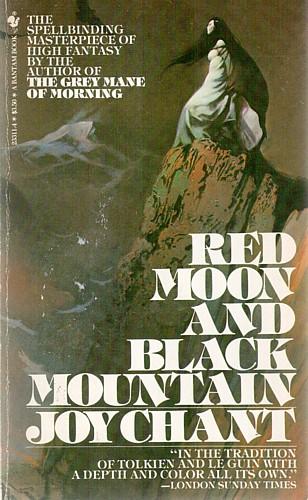
Joy Chant
Red Moon, Black Mountain
The Grey Mane of Morning

C.J. Cherryh
Rusalka, Chernevog, Yvgenie
The Paladin

M. Lucie Chin
The Fairy of Ku-She

Catherine Cooke
Winged Assassin Trilogy

Juanita Coulson
The Web of Wizardry, The Death God's Citadel

Leah Cutter
The Jaguar and the Wolf
Paper Mage
The Caves of Buda

Kara Dalkey
Goa, Biajipur, Bhagavati
Little Sister
The Heavenward Path
The Nightingale
Genpei
Euryale

Chitra Banerjee Divakaruni
The Brotherhood of the Conch series
The Palace of Illusions

Sara Douglass
Threshhold

Amanda Downum
The Drowning City, The Bone Palace

Doris Egan
Gate of Ivory

Kate Elliott
Crossroads Trilogy
Spiritwalker
Cold Fire

Jennifer Fallon
Lion of Senet, Eye of the Labyrinth, Lord of the Shadows

Nancy Farmer
The Ear, the Eye, and the Arm
The House of the Scorpion

Catherine Fisher
The Oracle Betrayed
The Sphere of Secrets
The Scarab

Susan Fletcher
Alphabet of Dreams

Eugie Foster
Returning My Sister's Face and Other Far Eastern Tales of Whimsy and Malice (short story collection)

Esther Friesner
Nobody's Princess, Nobody's Prize
Wishing Season
Sphinx's Princess, Sphinx's Queen
Child of the Eagle

Jane Gaskell
The Serpent, Atlan, The City, Some Summer Lands

Pauline Gedge
The Scroll of Saqqara

Heather Gladney
Teot's War
Bloodstorm

Lisa Goldstein
The Red Magician

Allison Goodman
Eon: Dragoneye Reborn

Angelica Gorodischer
Kalpa Imperial

Hiromi Goto
Half World

Jo Graham
Black Ships
The Hand of Isis

Kathryn Grant
The Phoenix Bells
The Black Pearl Road
The Willow Garden

Kerry Greenwood
Cassandra
Electra
Medea

Shannon Hale
Book of a Thousand Days

Barbara Hambly
Sisters of the Raven, Circle of the Moon

Anne Harris
Inventing Memory

Lian Hearn
Across the Nightingale Floor, Grass for His Pillow, Brilliance of the Moon, The Harsh Cry of the Heron, and Heaven's Net is Wide

P.C. Hodgell
Godstalk

Nalo Hopkinson
The Salt Roads
The New Moon's Arms
Skin Folk (short story collection)

N.K. Jemisin
The Hundred Thousand Kingdoms, The Broken Kingdoms, The Kingdom of the Gods
The Killing Moon, The Shadowed Sun

K. V. Johansen
Blackdog

Alaya Dawn Johnson
Racing the Dark, The Burning City

Kij Johnson
The Fox Woman, Fudoki

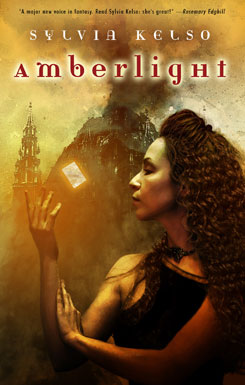
Sylvia Kelso
Amberlight

Lee Killough
The Leopard's Daughter

Patrice Kindl
Lost in the Labyrinth

Naomi Kritzer
Freedom's Gate, Freedom's Apprentice, Freedom's Sisters

Glenda Larke
Watergivers trilogy
The Mirage Makers trilogy
The Isles of Glory trilogy

Ursula LeGuin
Earthsea Books
Lavinia

Tanith Lee
Tamastara (short story collection)
Cyrion
Night's Master
Death's Master
Delirium's Mistress
Night's Sorceries
A Heroine of the World

Grace Lin
Where the Mountain Meets the Moon

Malinda Lo
Huntress

Karen Lord
Redemption in Indigo

Nathalie Mallet
The Princes of the Golden Cage, The King's Daughters

Zoe Marriott
Shadows on the Moon

Ardath Mayhar
The Seekers of Shar-Nuhn
How the Gods Wove in Kyrannon

Carole McDonnell
Wind Follower

Juliet E. McKenna
Aldebreshin Compass series

Antonia Michaelis
Tiger Moon

Karen Miller
Godspeaker Trilogy

Sasha Miller
Ladylord

Miyuki Miyabe
The Book of Heroes
Ico: Castle in the Sky

Donna Jo Napoli
Bound
Beast

Andre Norton
Wraiths of Time
Shadow Hawk
Dragon Magic
Empire of the Eagle (co-written with Susan Shwartz)
Imperial Lady: A Fantasy of Han China (co-written with Susan Shwartz)

Noriko Ogiwara
Dragon Sword and Wind Child

Nnedi Okorafor
Zahrah the Windseeker
Akata Witch
Who Fears Death

Fuyumi Ono
The Twelve Kingdoms

Holly Phillips
The Engine's Child

Cindy Pon
Silver Phoenix, Fury of the Phoenix

Jessica Amanda Salmonsen
Tomoe Gozen, Thousand Shrine Warrior, The Golden Naginata

Fay Sampson
Star Dancer

Marella Sands
Sky Knife
Serpent and Storm

Courtney Schafer
The Whitefire Crossing

Susan Shwartz
Heirs to Byzantium Trilogy
The Grail Of Hearts
Silk Roads and Shadows
Arabesques I and II, editor
Empire of the Eagle (co-written with Andre Norton)
Imperial Lady: A Fantasy of Han China (co-written with Andre Norton)

Carol Severance
Demon Drums, Storm Caller, Sorcerous Sea

Nisi Shawl
Filter House (story collection)

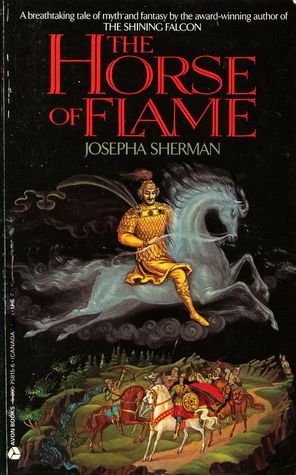
Josepha Sherman
The Horse of Flame
The Shining Falcon

Sharon Shinn
Gateway
General Winston's Daughter

Kari Sperring
The Grass King's Concubine

Nancy Springer
The White Hart, The Silver Sun, The Sable Moon

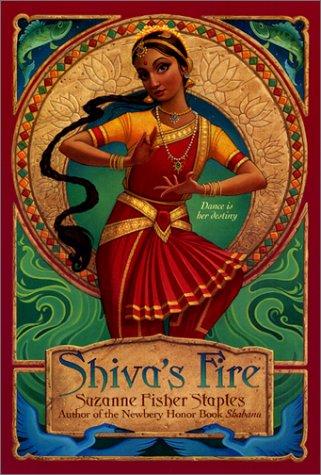
Suzanne Fisher Staples
Shiva's Fire

Judith Tarr
Alamut, The Dagger and the Cross
A Wind in Cairo
The Hall of the Mountain King, The Lady of Han-Gilen, A Fall of Princes
Arrows of the Sun, Spear of Heaven, Tides of Darkness
Lord of the Two Lands
Pillar of Fire
King and Goddess
Throne of Isis
The Shepherd Kings
White Mare's Daughter, Lady of Horses, Daughter of Lir
The Golden Horn

Sheree R. Thomas, editor
Dark Matter: Reading the Bones, Speculative Fiction from the African Diaspora

Heather Tomlinson
Toads & Diamonds

Nahoko Uehashi
Moribito: Guardian of the Spirit, Moribito II: Guardian of the Dark

Catherynne Valente
The Grass-Cutting Sword

Mary Victoria
Tymon's Flight

Martha Wells
City of Bones
Wheel of the Infinite
The Cloud Roads, The Serpent Sea

Elizabeth E. Wein
A Coalition of Lions
The Sunbird
The Lion Hunter
The Empty Kingdom

Michelle West
The Sun Sword series

Leona Wisoker
Secrets of the Sands

Carol Wilkinson
Dragon Keeper

Cherry Wilder
A Princess of Chameln, Yorath the Wolf, The Summer King

Liz Williams
Snake Agent, The Demon and the City, Precious Dragon, The Shadow Pavillion, The Iron Khan

Sarah Zettel
Sword of the Deceiver

***

Many thanks to Martha Wells for compiling this huge list. Again please chime in the comments with any other recommendations that fit with this list.

You Might Also Like:
Recommendations | So Much Steampunk, So Little Time
10 speculative fiction books I consider among the best ever
The 2010 Hattie Awards!!! Or the Best of 2010 (That I've Read)
The 2011 Hattie Awards!!! Or the Best of 2011 (That I've Read)
INTERVIEW | Karen Miller author of The Prodigal Mage
INTERVIEW | Martha Wells author of The Cloud Roads

GUEST POST | Bradley P. Beaulieu on Growing Pains: Lessons in Writing the Sequel

Art by Todd Lockwood
Growing Pains: Lessons in Writing the Sequel
by Bradley P. Beaulieu 

Strangely enough, though I've written five books up to this point (along with a few abandoned novels), I hadn't written a sequel until I launched into The Straits of Galahesh. I'd certainly had ideas for sequels. As a Tolkien disciple, I think in trilogies, so I had always planned on writing more books after the ones I'd finished before The Winds of Khalakovo, but I also knew that my time would be better spent if I tackled new projects. Why? Because if I did write a Book 2, I couldn't sell it. I'd have to sell its prequel, Book 1, first. And that didn't really help when (at the time) I was trying to get my name out there, get that first big sale.

Having more poles in the water, in other words, was the wiser course of action.

So it wasn't until STRAITS that I'd really had the chance to work with pre-existing material and expand on it. In some ways, it was a really gratifying thing. I'd spent so long developing the world, the characters, the magic, the politics, and then writing the story, it was like coming home. Strangely enough, I didn't jump right from WINDS and into STRAITS. When I finished wrapping up WINDS, I started submitting it for publication. That is, it wasn't sold yet. And so, following my mantra of starting a new project, I began working on a science fantasy. I got about 1/3 of the way through the book when the offer for WINDS came through from Night Shade. I was sad to set this other project aside, but I had no time to waste. I was now under contract. So the project went into the drawer and I started where WINDS left off.

Like I said, it was a nice homecoming, but it certainly wasn't easy. No book is easy. You're constantly applying the lessons you've learned (and sometimes breaking them) or learning new ones in the process of writing of the next book. Also, so much has to change in the next book. The characters, the world, the situation (i.e. the plot) based on the conclusion of the last tale. So there are always a lot of new challenges, even in writing a direct sequel.

As a small aside, just to share one of the oddities of publishing, I was 80% into the first draft of STRAITS (and I certainly knew how the book was going to end) by the time WINDS finally hit the shelves. So while it may seem from the outside that the writer has time to take stock and make adjustments, we really don't. By the time enough reviews had come in to actually start forming a consensus, I was fully done with the first draft and well into the second. The wheels of publishing move slowly, my friends.

Still, even though I didn't have a lot of outside influence in the form of reviewers or readers to guide the writing of the second book, I certainly learned some things along the way. The first that comes to mind is just how hungry readers are for explanation. One of the biggest criticisms I had for WINDS was the fact that not much of the underlying magic is explained. I will readily admit that it's something that's haunted me ever since I got serious about writing. In the first complete novel I ever wrote, I went rather heavy on explanation. After reading some books on writing and getting real feedback from writers on the book, I realized how blatant I was being about backstory. Then the pendulum swung the other way; I pulled way back and often explained too little. I've adjusted since then, but I still err on the side of not over-explaining. Note that I say "over-explain" where most readers would simply say "explain." People want to know backstory. They want to know how the world works. They just don't want it front-loaded. They want to become interested in the world and the characters first.


This is a very delicate balance—teasing the reader with questions without giving them the answers—and when you do give the answers, you want to do it in such a way that more questions are raised. This is one of the basic keys to good writing, but also one of the trickiest to do well. You have to find the right balance. Complicating this is the fact that the "rules" are not always going to be the same for each story you write. Some stories will call for front-loaded exposition. Others won't. (Like those with a big reveal toward the end of the tale. The Sixth Sense, anyone?)

I'm so against simply "telling" readers that I resisted the suggestion to put in a summary of Book 1 at the beginning of STRAITS. It turned out to be a great idea that people have commented on liking, but at first it just felt, I don't know, info-dumpy. But of course the point of such a summary isn't to dump information, but to re-orient the readers of WINDS before they dive into STRAITS, and also to give brand new readers some sense of the story already told in the event that they come to STRAITS first.

While writing STRAITS I started to grow more aware of just how hard it is to write metaphysical stuff. (I don't know if this is a lesson, per se, or more of a lament.) In the books, I have one type of magic that's akin to telepathy. Certain women called Matri submerge themselves in drowning chambers—basins filled with ice-cold water—and project themselves astrally. This stuff is really hard to write in a compelling way. I'm glad that I did it; it's a unique form of magic, and I think it adds a lot of cool mystique to the story. But let me tell you, I'll be surprised if my next set of books have even a whiff of such stuff. It's not that I dislike it. It's that it's exhausting to write in a way that I feel will be engaging to readers.

The last thing I'll mention is actually not a lesson that changed my behavior, but reinforced it. Lessons don't have to be negative. They can be positive reinforcements of rules you haven't really grokked yet. Perhaps you'd been told about them but hadn't put them into practice, or perhaps they were lessons you stumbled across (things self-taught, in other words), but you'll find that some of your initial strengths get better over time as you see how well they're working.

One such positive lesson for me was that finding and occasionally returning to my "center" as a writer is a very useful tool. This is a difficult thing to explain because it encompasses things like confidence and instinct, but what I'm talking about here is to trust in that inner, writer's mind that sometimes knows better than your conscious, waking mind. There were plenty of times in Book 1 where I felt lost. Sometimes I just knew I wasn't prepared for the session, and other times I started to write but came across a major stumbling block. I would often step away from the computer when I came across these sorts of barriers, but I would feel pretty bad when I did so. I'd feel anxious and behind. I'd feel like a failure, even if it was only for a day until I picked up my virtual pen again.

But now, after seeing how wise those breaks were, I no longer worry about these little blips. I know that if I work at the problem, I'll eventually find a resolution, and it'll usually work out pretty well—if not in first draft then in the second or third. I did not, however, simply wait for the muse to return. I would use a set of writing techniques to help jumpstart my stalled progress.

The first technique was to backtrack. If I'm lost, it's often because I took a wrong path in the writing a page ago, or a chapter ago, maybe even hundreds of pages ago. In one book (this was a painful lesson to learn) I found I'd taken a wrong path very early on. I had to re-write a ton of that book, and it was something that plagued the pages until I eventually gave up on the novel. Now I'm pretty good at recognizing not only that I've taken a wrong path, but identifying the place where I have to start over. This is a really good skill for young writers to nurture, because losing your way is one of the most common problems writers face, even the experienced writer.


The second technique was to consider the continuum of the story—to look at what I had already, look at its trajectory, and compare it to the place I wanted to be by the end. Using this technique assumes, of course, that you have a decent idea of what the ending looks like. Not every writer does. I usually do, and this allows me to make informed decisions about the plot and the characters, not so that I can create a linear set of scenes toward some arbitrary endpoint, but so that I can craft character decisions and plot points that will create an interesting landscape over which the reader can travel. I don't always end up in the exact place I thought I would. In fact, I rarely do. But that ending I have in mind from the beginning of the story? It allows me to guide the plot in creative ways without letting things fall off the rails completely.

The last technique I used was to return to that place that got me excited to write about these characters in the first place. It might be some of the original glimpses I had when the story idea first came to me. It might be looking at period artwork that gave me some inspiration. It might be some passage that I'm particularly proud of. The point is to return to a place of pride, creativity, of drive. I find that if I can do that, it will often advise my choices, and often I'll take the proper one to move forward. Sometimes finding your way out of writer's block is merely about confidence in the story, and this usually allows me to remember just how cool the story is in my head. Then it's just a matter of getting it onto the page.

It was a long road to the completion of the second novel, and there were bumps and bruises along the way, but it was all well worth it. I'm very excited to finally share the second installment of The Lays of Anuskaya, and I sincerely hope you enjoy it.


Bradley P. Beaulieu is the author of The Winds of Khalakovo and The Straits of Galahesh, the first two books in The Lays of Anuskaya trilogy and co-author of the novella Strata. In addition to being an L. Ron Hubbard Writers of the Future Award winner, Brad's stories have appeared in various other publications, including Realms of Fantasy Magazine, Orson Scott Card's Intergalactic Medicine Show, Writers of the Future 20, and several anthologies from DAW Books. His story, "In the Eyes of the Empress's Cat," was voted a Notable Story of 2006 in the Million Writers Award. His website is www.quillings.com.

You Might Also Like:
REVIEW | The Winds of Khalakovo by Bradley P. Beaulieu
GUEST POST | Bradley Beaulieu on The Winds of Khalakovo and Cultural Influences
GUEST POST | Michael J. Sullivan on Writing a Series of Intertwining Books Rather than Sequels
AUTHOR INTERVIEW | Karen Miller author of The Prodigal Mage
GUEST POST | Will McIntosh on Comic Strips Made Me Write Hitchers

GUEST POST | Will McIntosh on Comic Strips Made Me Write Hitchers

Will McIntosh on 
Comic Strips Made Me Write Hitchers

It would be reasonable to assume that my new novel Hitchers began with the idea of hundreds of thousands of people becoming possessed, more or less simultaneously, all in the same city, and then I came up with a storyline about a frustrated cartoonist as the scaffolding to support the idea. That’s not how it evolved, though. It started with the frustrated cartoonist, who hijacks his late grandfather’s long-running, esteemed comic strip, and then changes it dramatically, and makes it wildly successful. I got the idea while reading David Michaelis’ biography of Charles Schulz. I learned that Schulz expressly forbade his heirs from allowing another artist to continue the strip after his death. That got me thinking about the hijacked strip idea. When I told a friend about the idea, he pointed out that having someone continue a comic strip against the wishes of his late grandfather wasn’t much of a story, while reminding me that I was a SF/Fantasy writer. So I added half a million dead people.

There’s a lot of talk about comic strips in Hitchers. There are even some actual comic strips slipped among the pages. It will probably surprise no one to learn that I’m a big fan of comic strips, and fascinated by their creators.

I’m fascinated by Bill Watterson, the artist/creator behind Calvin and Hobbes, because he absolutely refused to allow Calvin and Hobbes to appear on merchandise. He believed it would cheapen the art. Watterson is notoriously reclusive, rarely answering fan mail or making public appearances, and he ended up walking away, ending his strip while it was still hugely popular. I was tempted to cast my protagonist Finn Darby in the mold of an intentional recluse, but ultimately decided against it. Finn is happy to merchandise his wildly popular add-on character, Wolfie, and he becomes reclusive only because he’s afraid his grandfather might take over his body in the middle of a television interview and embarrass the hell out of him.

Reading an article about Watterson’s final strip, which is a poignant, understated masterpiece, I became fascinated with the idea of cartoonists’ final strips, and this plays out prominently in Hitchers, as Finn becomes fascinated by them as well. He’s disappointed--nay, disgusted--by his grandfather’s final strip, which is just one more lame, corny joke strip. Finn feels as if his grandfather doesn’t deserve the final say on the strip, even though he created it. Ultimately, Finn will write his own final strip, and it will be much more modern, and far, far darker, than Grandpa’s final effort.

I wrote a half-dozen strips to be inserted into the narrative of Hitchers, and they were wonderfully executed by Scott Brundage. I’d never tried writing comic strips before, and found it both a challenge and a hell of a lot of fun. It’s like writing Haiku; you only have three panels, you can’t have too many words in each panel, and each should tell a complete story. Finn discovers that it’s not easy to come up with a new strip every day, 365 days a year. Some cartoonists report that it’s a brutal pace. In how many creative professions must you consistently come up with a new piece of work on an average of one per day? And most strips are intended to be funny--I can’t imagine trying to write something funny every day.

Click to embiggen
In Hitchers, Finn makes a living selling original comic art until he “procures” the rights to his late grandfather’s strip. Again, I drew this detail from personal experience--my father and I have been collecting original comic art together for the past twenty years. Finn recalls an exchange with his grandfather, when good old Grandpa was still alive. Finn offered to sell off the huge stacks of original Toy Shop strips his grandfather accumulated over the years, estimating that he can get fifty dollars apiece for dailies, and seventy five for Sunday strips (Sunday strips are larger, so more valuable). Grandpa refused when he learned that Peanuts dailies sell for ten thousand each. That’s an accurate figure, believe it or not. In fact, it’s on the low side, especially if we’re talking about a Snoopy and the Red Baron strip.

The image of Grandpa’s huge piles of originals came from a phone conversation I had with the grandson of Al Smith, who carried on one of the earliest comic strips, Mutt and Jeff, after creator Bud Fischer passed away. Al Smith’s grandson was selling off his late grandfather’s strips, and described having thousands and thousands stacked on shelves, pretty much every single day from 1918 into the 1970s. I couldn’t resist giving Grandpa a comparable stash, from the 1950s through 2010.

It’s interesting, how much cartoonists vary on how they handle their original art. Early on, Schulz gave away Peanuts strips to fans, but when he discovered people were selling them, he stopped. From what I understand, the Schulz family now buys back some of the strips that come to auction. They must have an awesome collection. I bought two Bloom County dailies directly from Berke Breathed. He decided to sell off four years of strips ($400 each), but is holding on to the rest. Try to find a Calvin and Hobbes original – I dare ya.

A 2003 Clarion graduate, Will McIntosh recently won the Hugo Award for best short story. By day, he's a psychology professor at Georgia Southern University. His first novel, Soft Apocalypse, was published in April, 2011, by Night Shade Books and his second Hitchers was recently published. His next book will be based off his Hugo award-winning short story "Bridesicle."

You Might Also Like:
REVIEW | Soft Apocalypse by Will McIntosh
REVIEW | Brave New Worlds edited by John Joseph Adams
REVIEW | Shades of Grey by Jasper Fforde
REVIEW | The Windup Girl by Paolo Bacigalupi